

Why businesses need to understand what customers actually value before investing in product innovation, features and marketing.
A Good Marketing Campaign Cannot Fix a Weak Product
A product can have attractive packaging, impressive advertising and a long list of features. It can generate attention on social media and even encourage consumers to try it once. But does that mean consumers genuinely value the product?
At Electroyuva, we believe businesses sometimes invest more in communicating product benefits than in understanding whether those benefits matter to consumers in the first place.
Consider a simple example. A skincare brand launches a new cream with five advanced ingredients, premium packaging and a celebrity endorsement. The campaign creates excitement, but consumers may still prefer a simpler product that delivers the results they actually want. The same situation can happen across electronics, food, fashion, personal care and other categories.
The problem is not necessarily poor marketing. It is the possibility that the product's features and benefits do not match what customers are looking for.This raises an important question for businesses: Are consumers paying for genuine product benefits, or are they being influenced by how those benefits are presented?
For companies investing in new products, answering this question before launch can make a significant difference.
What Does the Research Tell Us?
Consumer research suggests that customers are becoming more careful about what they buy, how much they pay and what they expect from a product.
A few recent studies provide useful insights.
Genz buying priority: Quality matters. Price must make sense. Claims need proof.
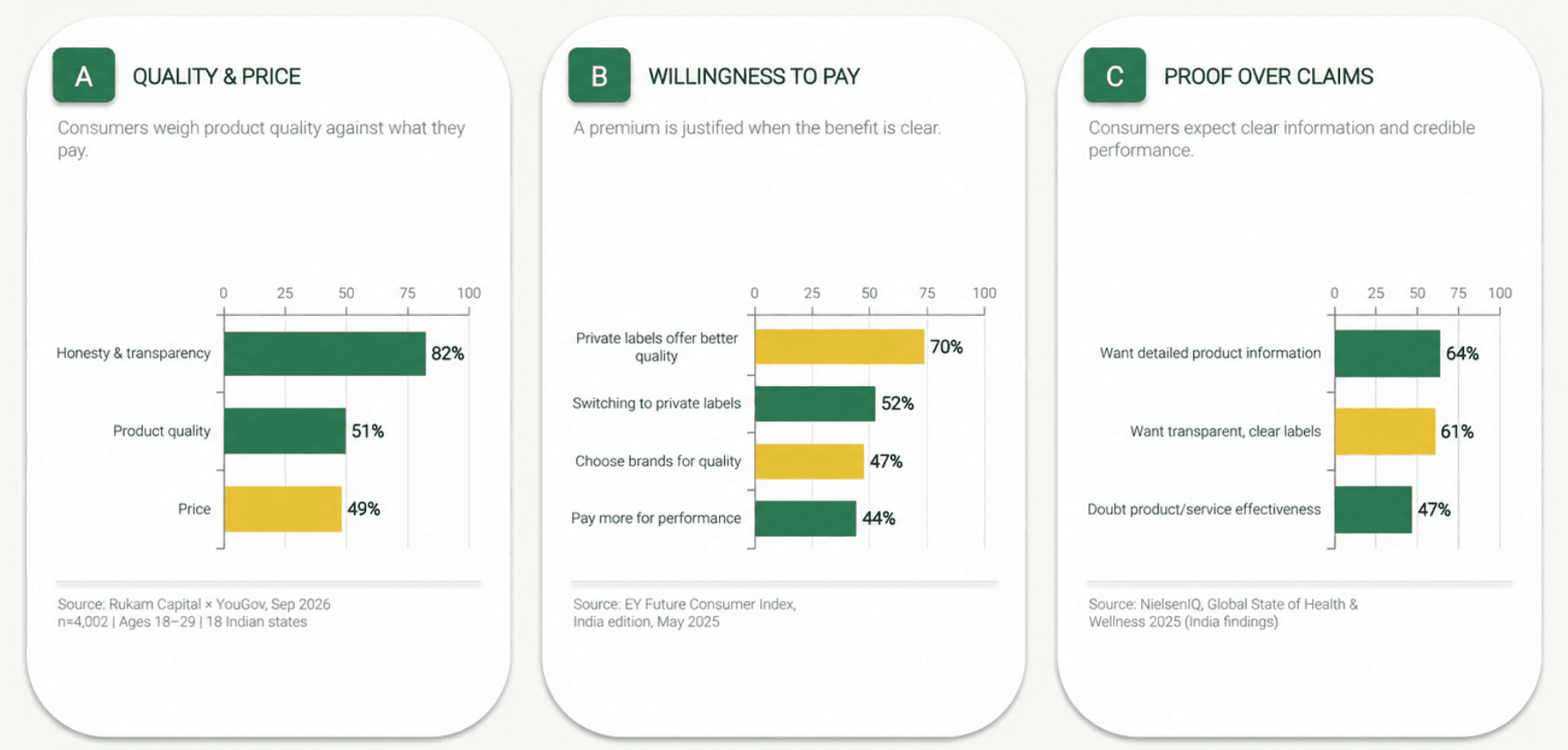
These findings are particularly relevant to health, wellness and personal care brands. Simply using words such as advanced, natural, clinically tested or high performance may not be enough. Consumers also want to understand what those claims mean and whether the product can deliver the expected results.
What Does This Mean for Product Innovation?
The evidence points towards three important considerations for businesses.
A. More features do not always mean more value
Businesses often believe that adding more features makes a product more attractive. However, consumers may not value every feature equally.
For example:
- A smartphone buyer may care more about battery life and camera performance than ten additional software features.
- A skincare customer may prioritize visible results and skin suitability over a long list of ingredients.
- A fitness customer may value comfort and accurate tracking more than additional features they rarely use.
The problem arises when businesses develop products around what they can offer rather than what customers actually need. Product innovation should begin with understanding consumer problems, not simply adding more features.
B. Marketing can create interest, but product performance builds confidence
Marketing plays an important role in introducing products and explaining their benefits. However, there is a difference between a consumer liking an advertisement and believing that a product will deliver the promised results. A strong campaign may generate awareness and initial interest. But if the product fails to meet expectations, the customer may not purchase again. This is particularly important for new brands entering competitive categories. Attractive communication can help them get noticed, but consistent product performance is what gives consumers a reason to stay. Businesses should therefore measure both marketing effectiveness and actual product acceptance.
C. Consumers may like a product concept but still refuse to buy it
This is one of the most important challenges in product development. During early research, consumers may respond positively to a new product idea. They may like its design, features, packaging or advertised benefits. But positive feedback does not automatically translate into purchase.
A consumer might like a premium product but find it too expensive. Another might appreciate a new feature but consider it unnecessary. Someone else might express interest but prefer an established competitor. This is why businesses should not depend entirely on general feedback such as "I like this product" or "This is a good idea". They need to understand purchase interest, price acceptance, product preference and the reasons behind consumer choices.
Electroyuva's Perspective – How Should Businesses Approach Product Innovation?
At Electroyuva, we believe product innovation should be driven by consumer needs rather than internal assumptions. Businesses should establish whether a product benefit is genuinely valuable before investing heavily in development, production and marketing. We recommend focusing on four areas.
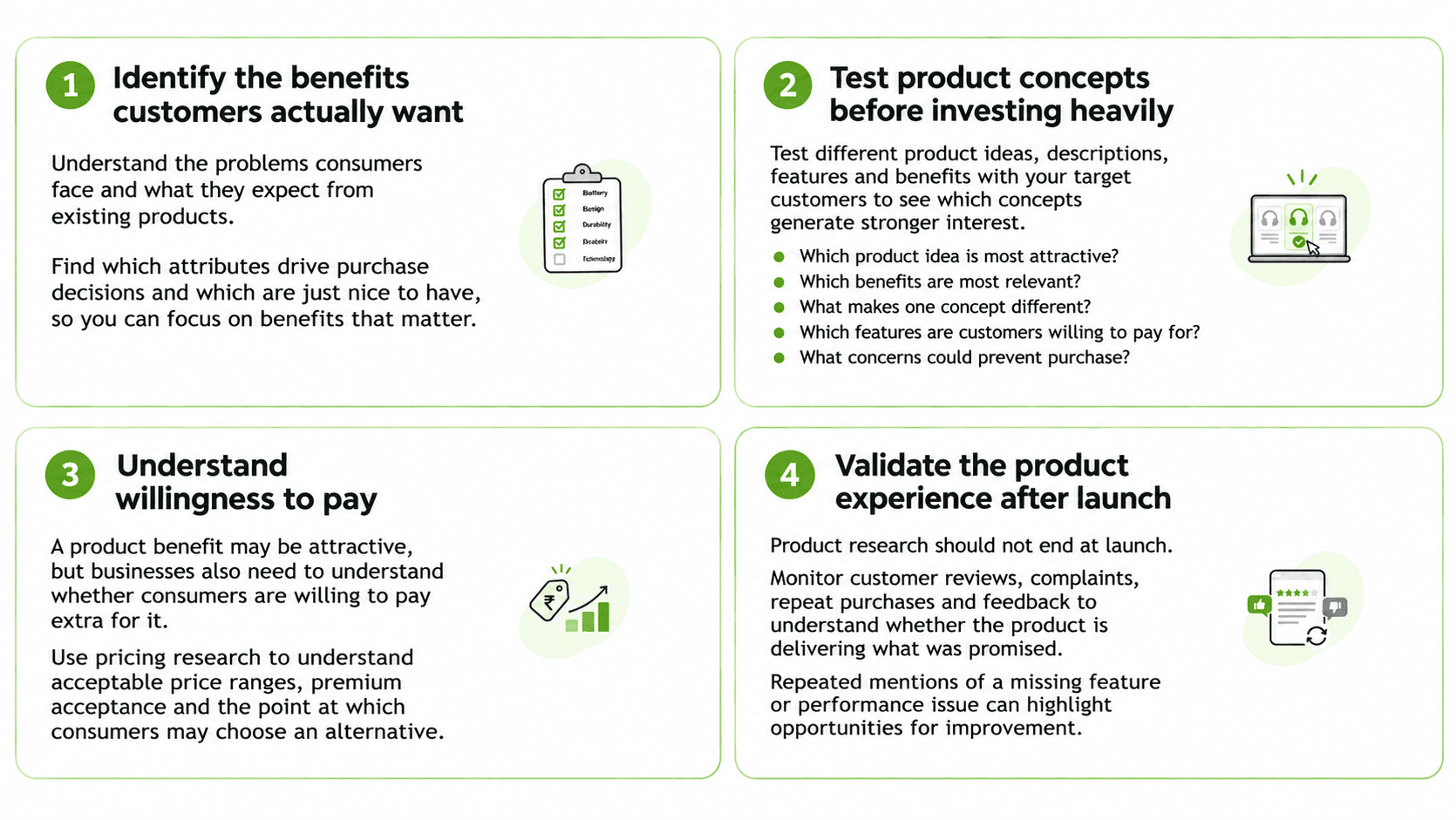
This creates a continuous cycle of consumer understanding, product development and improvement.
How Consumer Research Can Help
Electroyuva believes businesses can make better innovation decisions by combining different research approaches:
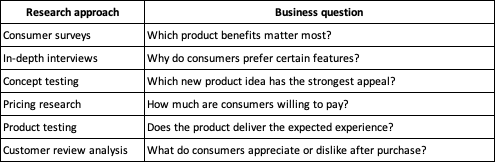
The objective is to connect consumer expectations with product decisions before and after launch.
Build What Customers Value, Not Just What You Can Market
A strong marketing campaign can make a product attractive, but it cannot replace genuine product value. The research suggests that consumers are willing to consider premium products when they see meaningful improvements in quality and performance. At the same time, they are becoming more careful about pricing, product information and whether brands deliver on their promises. For businesses, the opportunity is to understand the difference between what consumers say they like and what they are actually willing to buy.
At Electroyuva, we believe successful product innovation starts with one question: Does this product solve a problem or deliver a benefit that customers genuinely value? Because the best product is not necessarily the one with the most features or the biggest marketing campaign. It is the one that gives customers a compelling reason to choose it.
Electroyuva | Consumer Intelligence. Market Understanding. Business Growth.
Sources & References
- Rukam Capital and YouGov, Gen Z: A Deep Dive into India's Most Influential Consumer Cohort, September 2026. ETRetail – Study findings.
- EY India, 52% consumers are switching to private labels: EY Future Consumer Index, 21 May 2025. Read the report findings.
- NielsenIQ, Indian Consumers Are Taking Charge of Their Health Through Smarter Food and Tech Choices, 1 July 2025. Read the study.
Research note: The findings come from different studies, conducted at different times and among different consumer groups. They should not be treated as directly comparable or as representative of every product category.