

Why Are Brands Moving Budget Towards Commerce Advertising?
What does Electroyuva think?
For years, brands have invested in advertising to influence what consumers think, feel and remember. Television, digital video, social media and search have played an important role in building awareness and consideration. But advertising is changing. Brands increasingly want to reach consumers closer to the moment of purchase. This is where commerce advertising is gaining attention. E-commerce marketplaces, quick-commerce platforms and retail apps are becoming important advertising destinations. They allow brands to reach shoppers while they are browsing products, comparing prices or preparing to make a purchase. The shift is visible in India's advertising market. According to Datum Intelligence, commerce advertising is forecast to grow by 27% in 2026, compared with 11% growth for the overall advertising market. But faster growth raises an important question.
Are brands generating additional sales through commerce advertising, or are they simply paying to reach customers who were already planning to buy?
At Electroyuva, we believe commerce advertising has the potential to make media investment more measurable. However, sales attribution should not be confused with actual sales growth
What supports our thinking?
Commerce advertising is growing faster than the overall market
According to Datum Intelligence's India Advertising Forecast 2025–2030, India's commerce advertising market is expected to grow from ₹23,740 crore in 2025 to ₹30,091 crore in 2026. This represents 27% annual growth, compared with an estimated 11% growth in the overall advertising market.
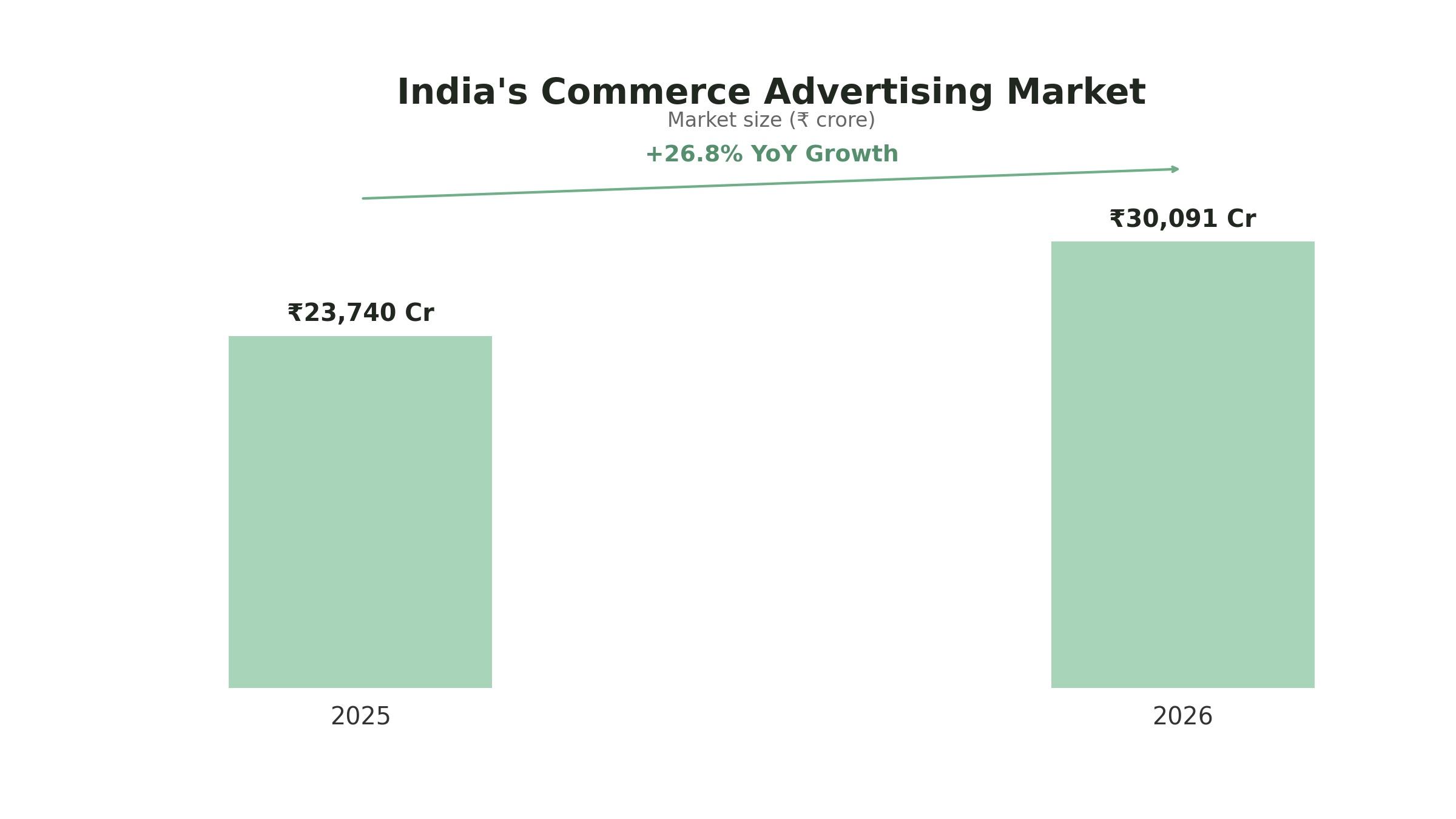
The difference is significant. Commerce advertising is growing at more than twice the rate of the overall advertising market. The growth reflects the increasing importance of e-commerce and quick-commerce platforms in the media plans of consumer brands.
Why are brands interested in commerce advertising?
Commerce platforms offer something traditional media channels often struggle to provide: a direct connection between advertising exposure and shopping activity.
Consider a consumer browsing a marketplace for a face wash. The platform can show sponsored products, display competing brands, highlight offers and influence which product the consumer eventually purchases.
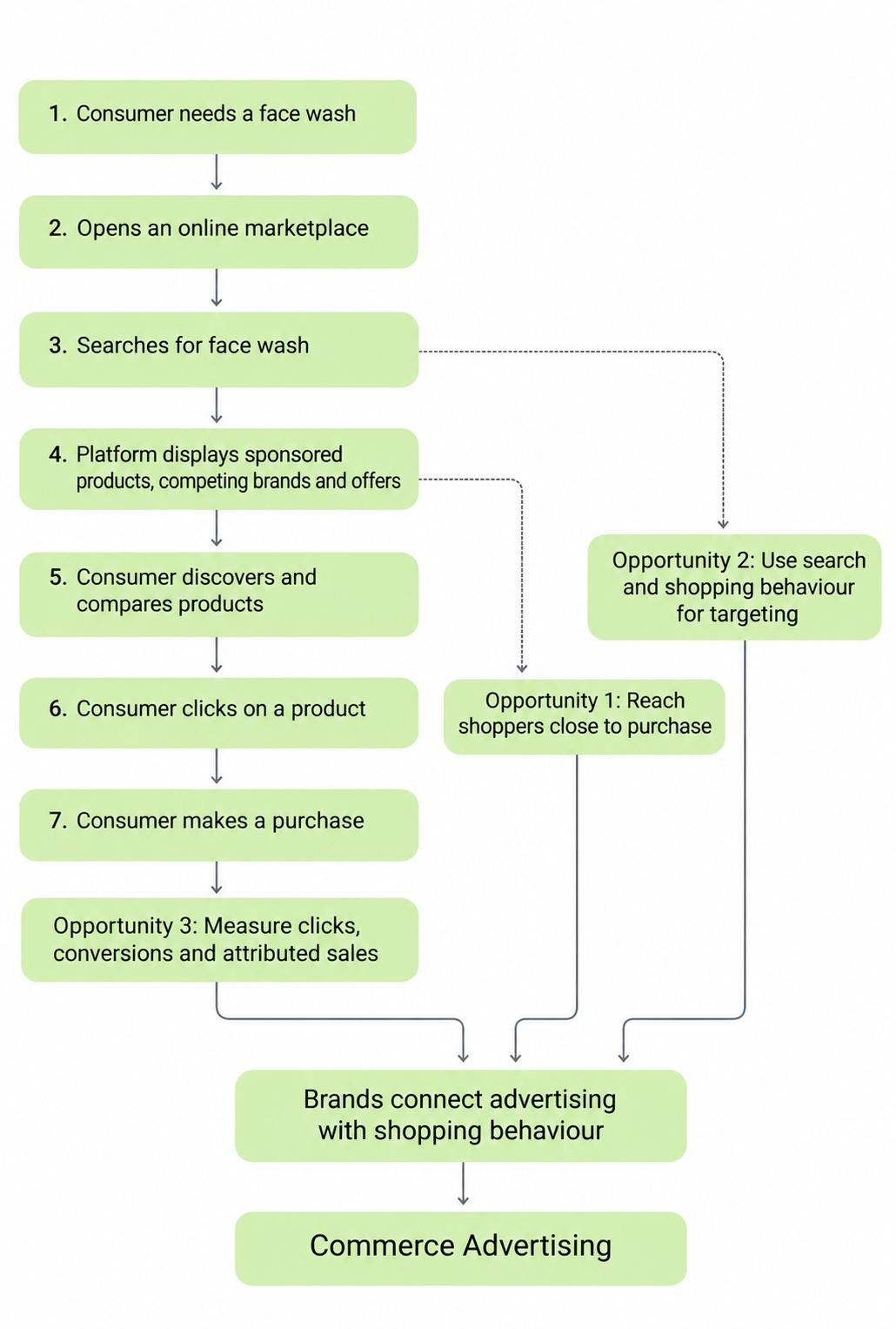
For brands, this creates three important opportunities:
- Reach shoppers closer to purchase: Advertising can appear when consumers are actively exploring a category or product.
- Use shopping behaviour for targeting: Platforms can use browsing, search and purchase signals to reach relevant audiences.
- Connect media with transactions: Brands can access campaign-level information such as impressions, clicks and attributed purchases. Commerce advertising is therefore becoming more than another digital media format. It is developing into a channel that connects media, retail and consumer behaviour.
Retail media is also gaining importance globally
The growth is not limited to India. According to WPP Media's 2026 Global Midyear Forecast, global commerce advertising revenue is forecast to reach USD 199.6 billion in 2026. Retail media is expected to account for approximately 97% of this market. This highlights how retailers are becoming media owners in their own right. Their platforms are no longer just places where products are sold. They are also places where brands compete for consumer attention.
But measurement remains a major challenge
A growing advertising channel also needs a reliable way to demonstrate its value.
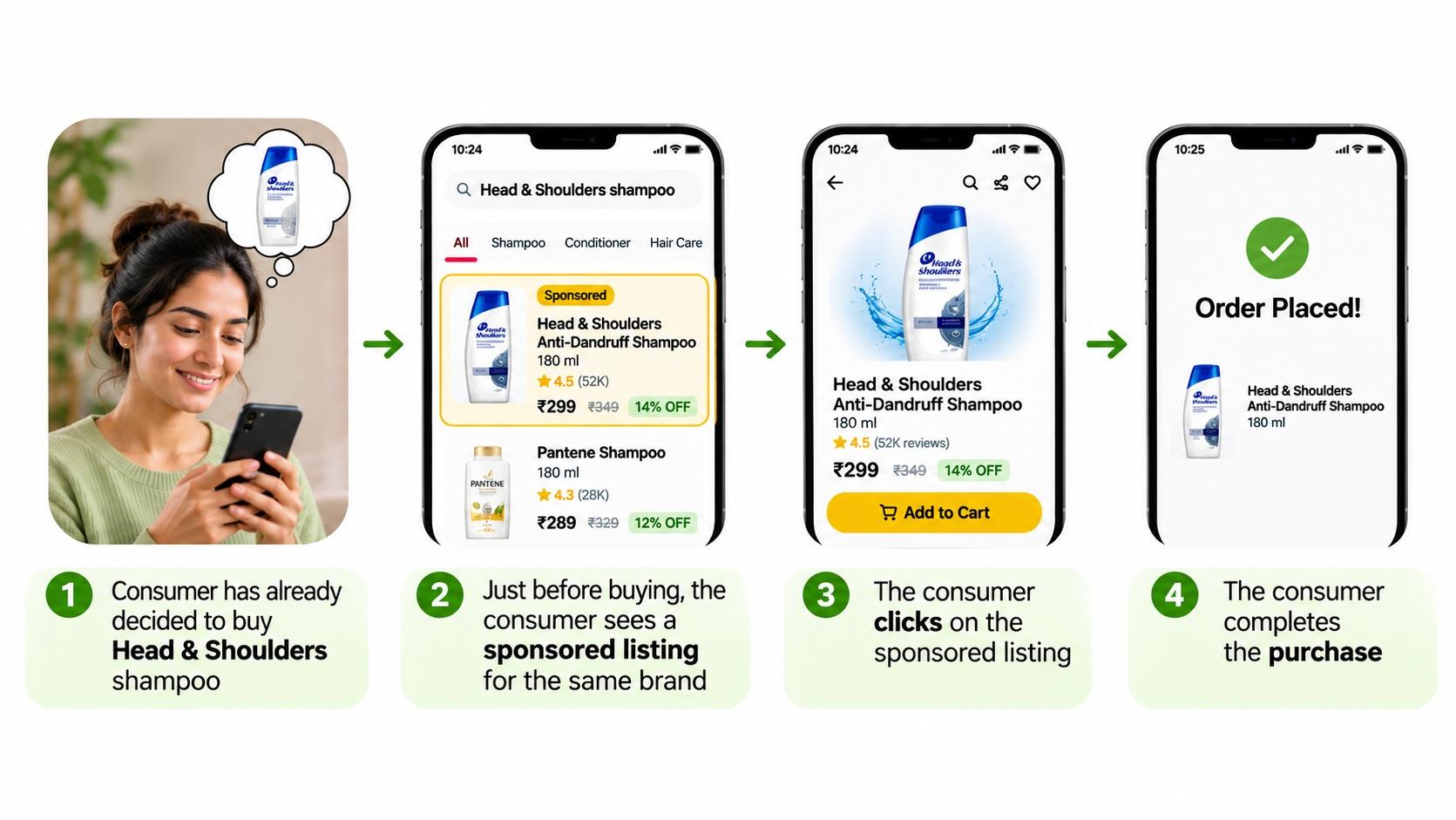
NielsenIQ's July 2026 analysis, How Brands Can Measure Incrementality and Prove Retail Media Impact, highlights a key problem: brands often use return on ad spend (ROAS) and attributed sales as indicators of campaign success, even though these metrics do not necessarily prove that advertising caused additional purchases. The distinction is important.
What does the evidence mean?
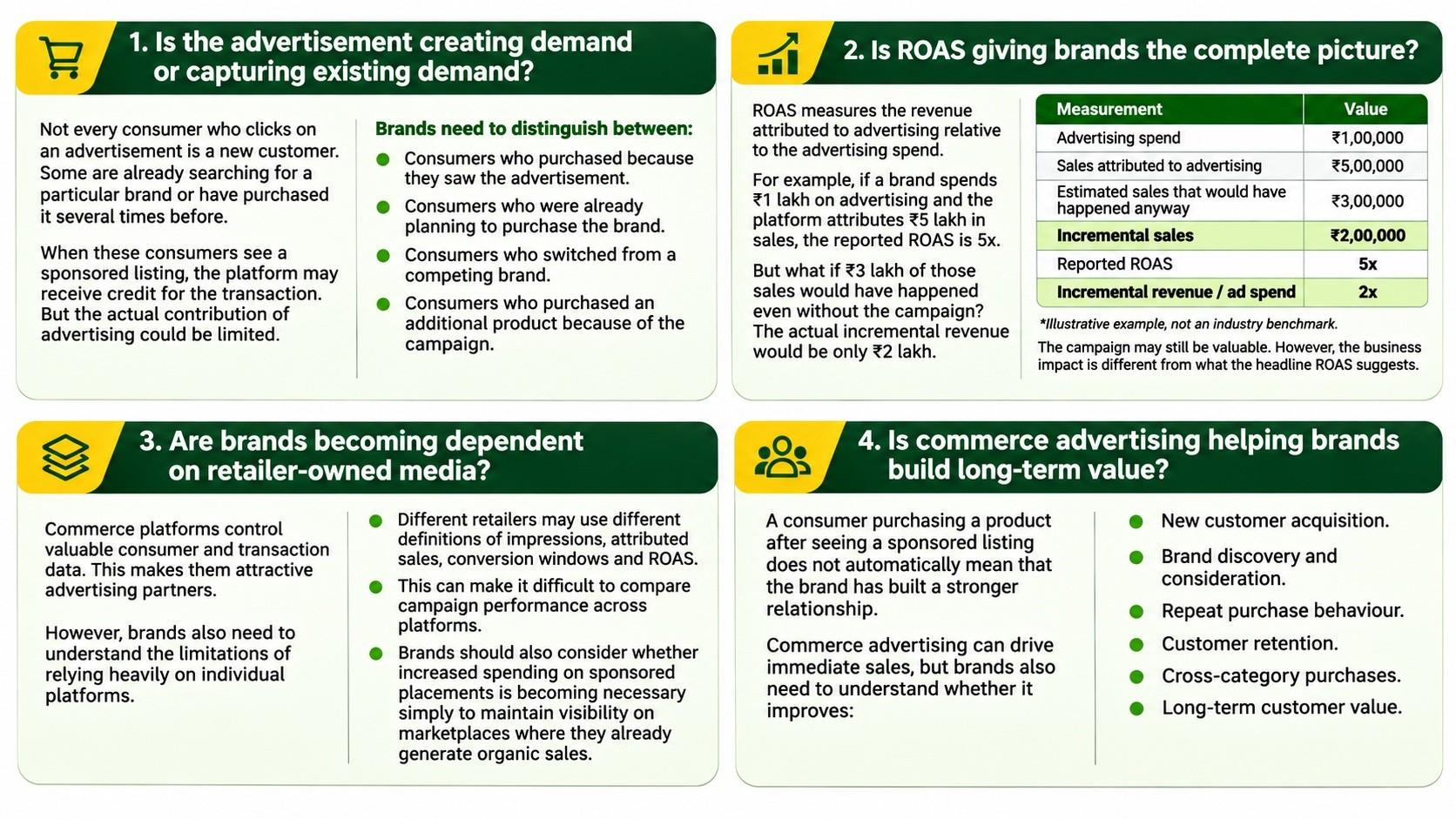
The growth of commerce advertising reflects a change in how brands think about media investment. Earlier, advertising success was often evaluated through awareness, reach, engagement and brand recall. Today, brands increasingly want to understand whether advertising is influencing product discovery, consideration and actual purchases. Commerce advertising brings these objectives closer together. However, we believe there are four important questions brands should consider.
Electroyuva's Perspective - What should brands do?
We believe brands should not treat commerce advertising as a replacement for traditional digital media. It should be evaluated as part of a wider communication and media strategy. The real opportunity is to understand how different channels work together across the consumer journey. Electroyuva recommends five areas of focus.
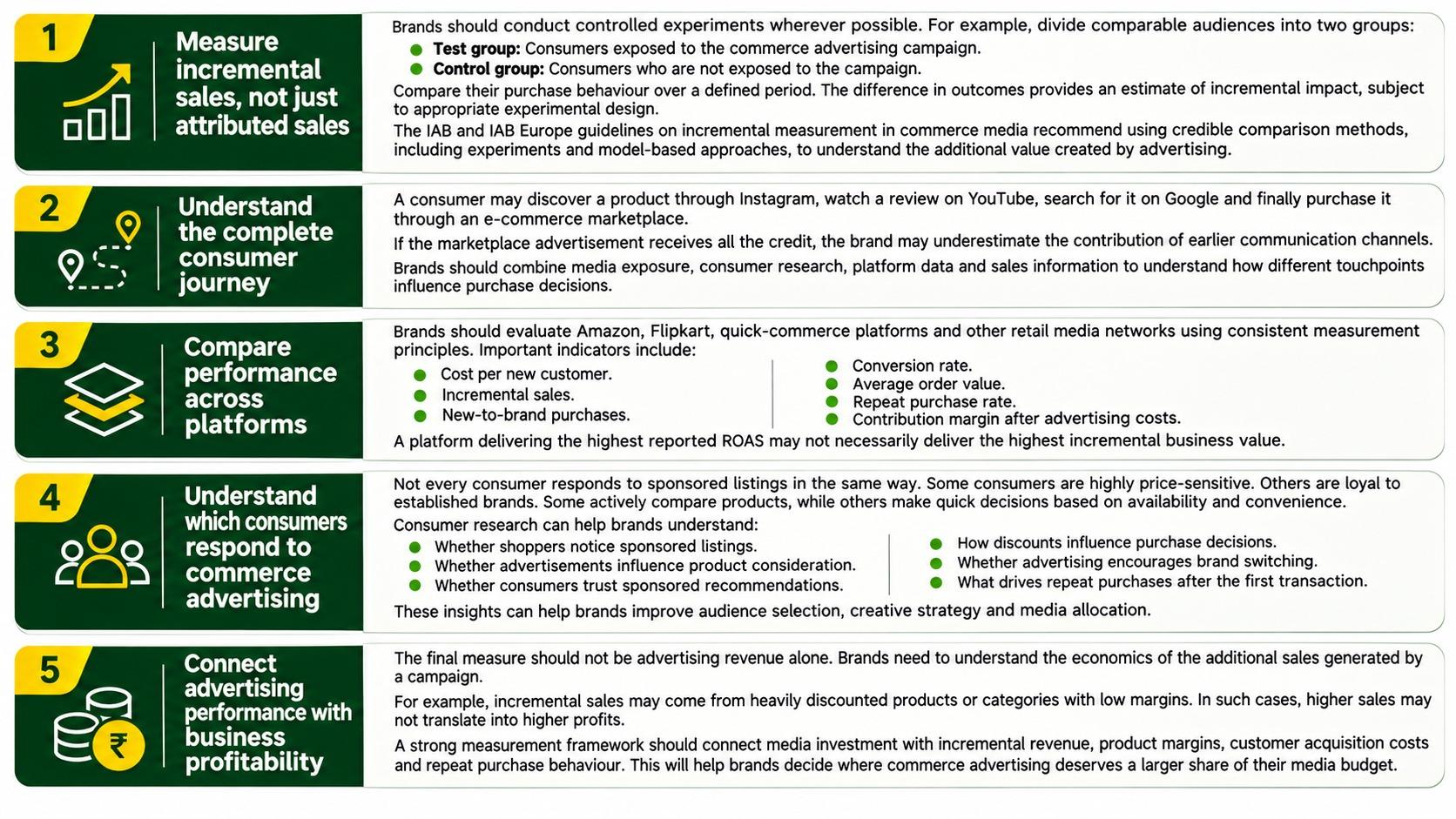
What is our final point of view?
Commerce advertising is growing because it brings brands closer to the point of purchase. It offers access to shopping audiences, valuable consumer signals and a clearer connection between advertising and transactions. But better visibility of sales does not automatically mean better advertising effectiveness. A sponsored listing may influence a purchase, accelerate a decision or simply capture credit for a transaction that was already likely to happen. For brands, the next challenge is to move beyond reported ROAS and understand the actual contribution of advertising to business growth. At Electroyuva, we believe the future of commerce advertising will depend not only on how much brands spend, but on how accurately they measure what that spending creates.
The real measure of advertising effectiveness is not how many sales a platform claims. It is how many additional sales the brand would have missed without the advertising.
Electroyuva | Consumer Intelligence. Market Understanding. Business Growth.
Sources and References
- Datum Intelligence – India Advertising Forecast 2025–2030 / Festive AdEx 2026, September 2026. https://datumintell.com/report-festive-adex-2026
- WPP Media – 2026 Global Midyear Forecast. https://s3.amazonaws.com/media.mediapost.com/uploads/WPPMediaMidYearForecast.pdf
- NielsenIQ – How Brands Can Measure Incrementality and Prove Retail Media Impact, 24 July 2026. https://nielseniq.com/global/en/insights/analysis/2026/retail-media-incrementality-measurement/
- Interactive Advertising Bureau (IAB) and IAB Europe – Guidelines for Incremental Measurement in Commerce Media, November 2025. https://www.iab.com/guidelines/guidelines-for-incremental-measurement-in-commerce-media/
- Interactive Advertising Bureau (IAB) and Media Rating Council (MRC) – Retail Media Measurement Guidelines, January 2024. https://www.iab.com/wp-content/uploads/2024/01/IAB_Retail_Media_Measurement_Guidelines_January2024.pdf