

Why poor customer experiences are costing businesses repeat purchases, brand trust and long-term customer relationships.
Customers Don't Always Leave Because of a Better Product
Businesses spend considerable time and money attracting new customers. They invest in advertising, discounts, loyalty programmes and new product launches. But an equally important question often receives less attention: why do existing customers stop buying? At Electroyuva, we believe that customer retention is not only about offering a good product or competitive price. It is also about consistently delivering the experience that customers expect. Consider a simple example. A customer orders a product online because the brand promises next-day delivery. The product arrives three days late. When the customer contacts support, they receive no clear response. Even if the product itself is good, the overall experience has already created disappointment. The customer may not complain. They may simply choose another brand the next time they purchase. This is where businesses often lose customers without fully understanding why. Customer dissatisfaction rarely comes from one major problem alone. It can build through several small failures, such as delayed deliveries, unclear communication, complicated returns, unexpected charges or unresolved complaints. For businesses, the challenge is not just to measure whether customers are satisfied. It is to understand where expectations are not being met and what makes customers consider switching.
What Does the Research Tell Us?
Recent customer experience studies highlight how strongly service quality, expectations and issue resolution influence customer decisions.
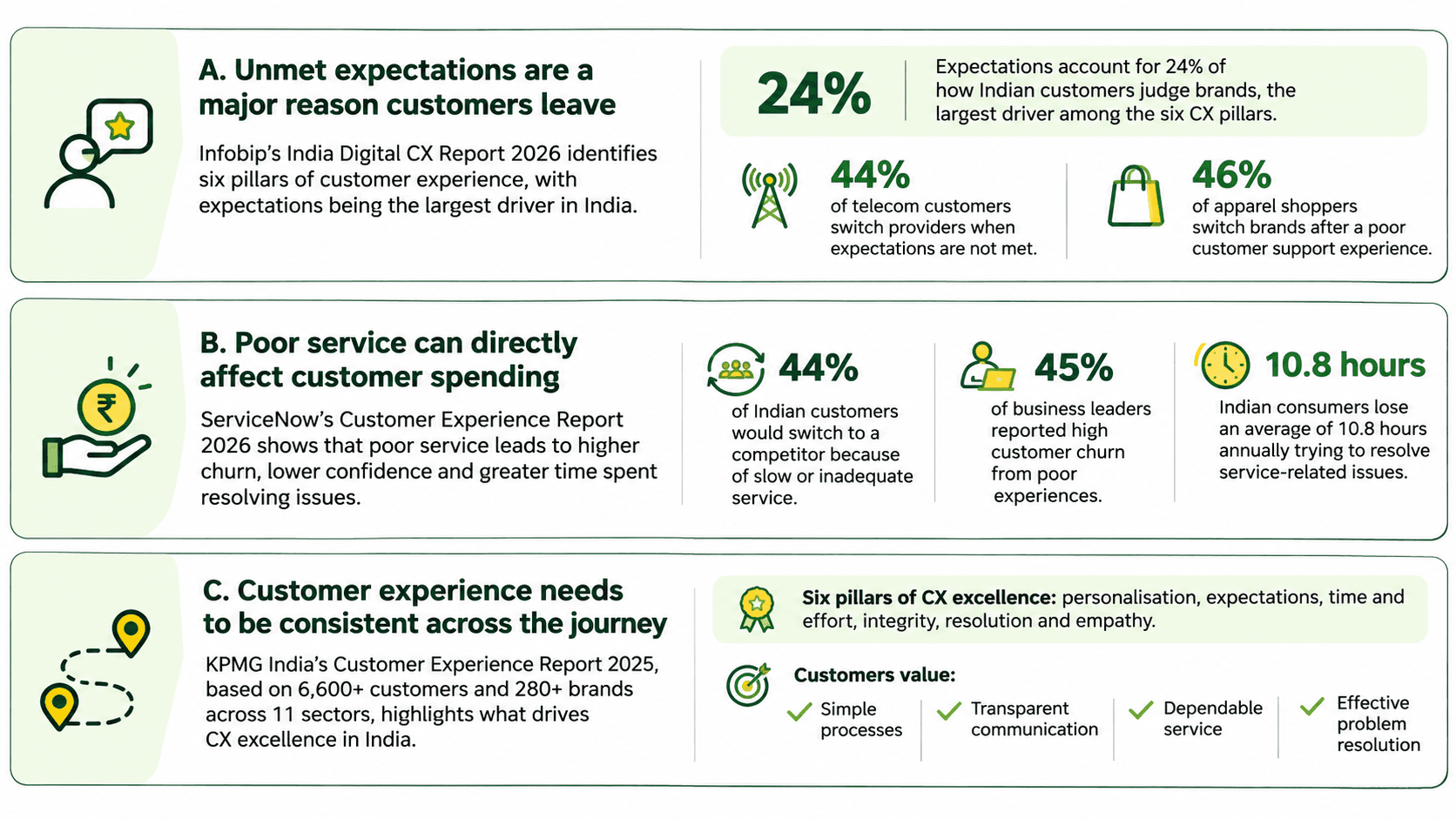
Where Are Businesses Losing Customers?
The research points towards three important areas where customer experiences can break down.
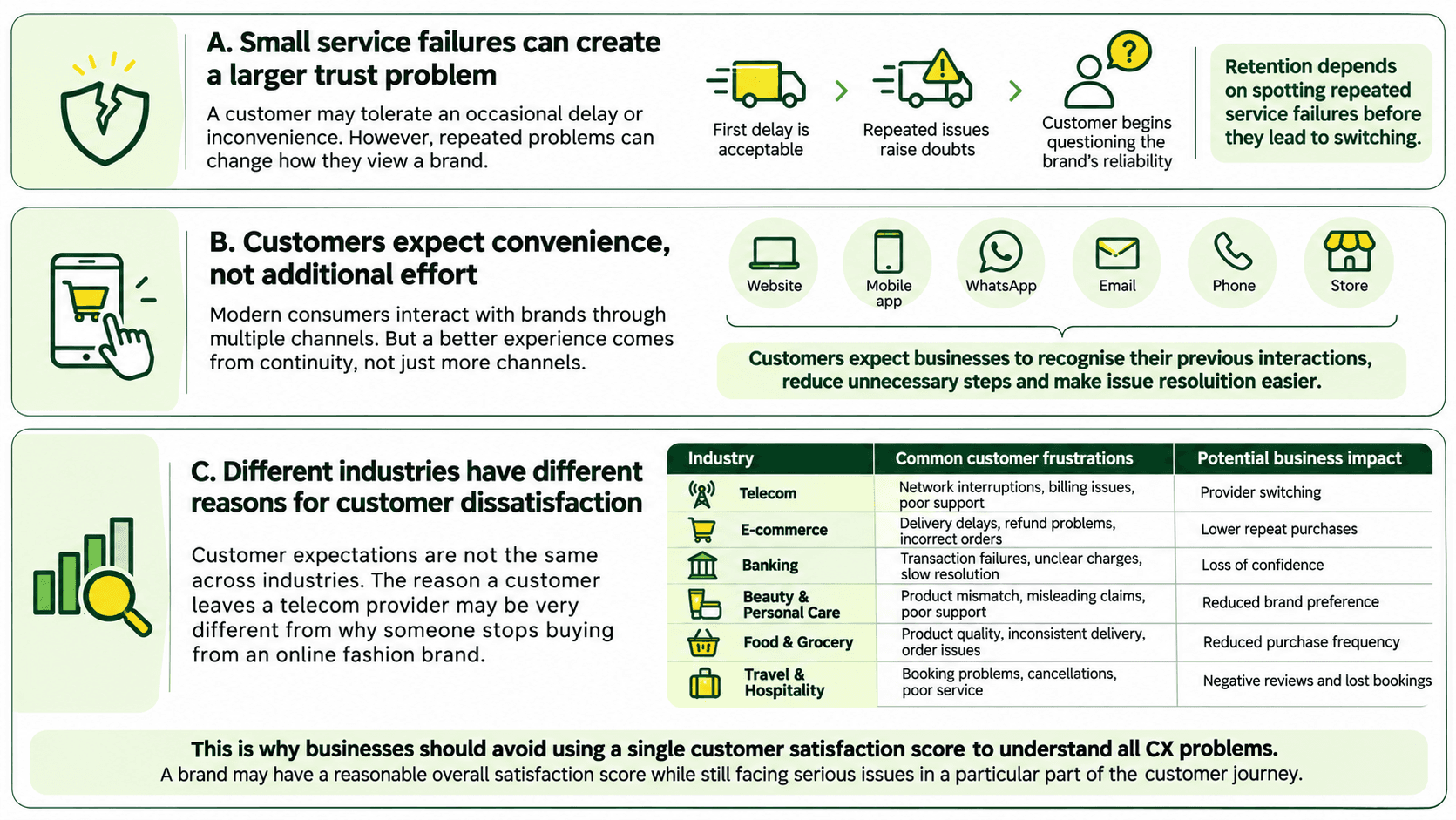
Understanding the specific reasons behind dissatisfaction is far more useful than knowing only how satisfied customers are.
Electroyuva's Perspective – What Should Businesses Do?
At Electroyuva, we believe businesses need to move beyond measuring customer satisfaction and start understanding the reasons behind customer dissatisfaction. The objective should be to identify which experiences create frustration, which problems lead to switching and which improvements can encourage customers to stay. We recommend four areas of focus.
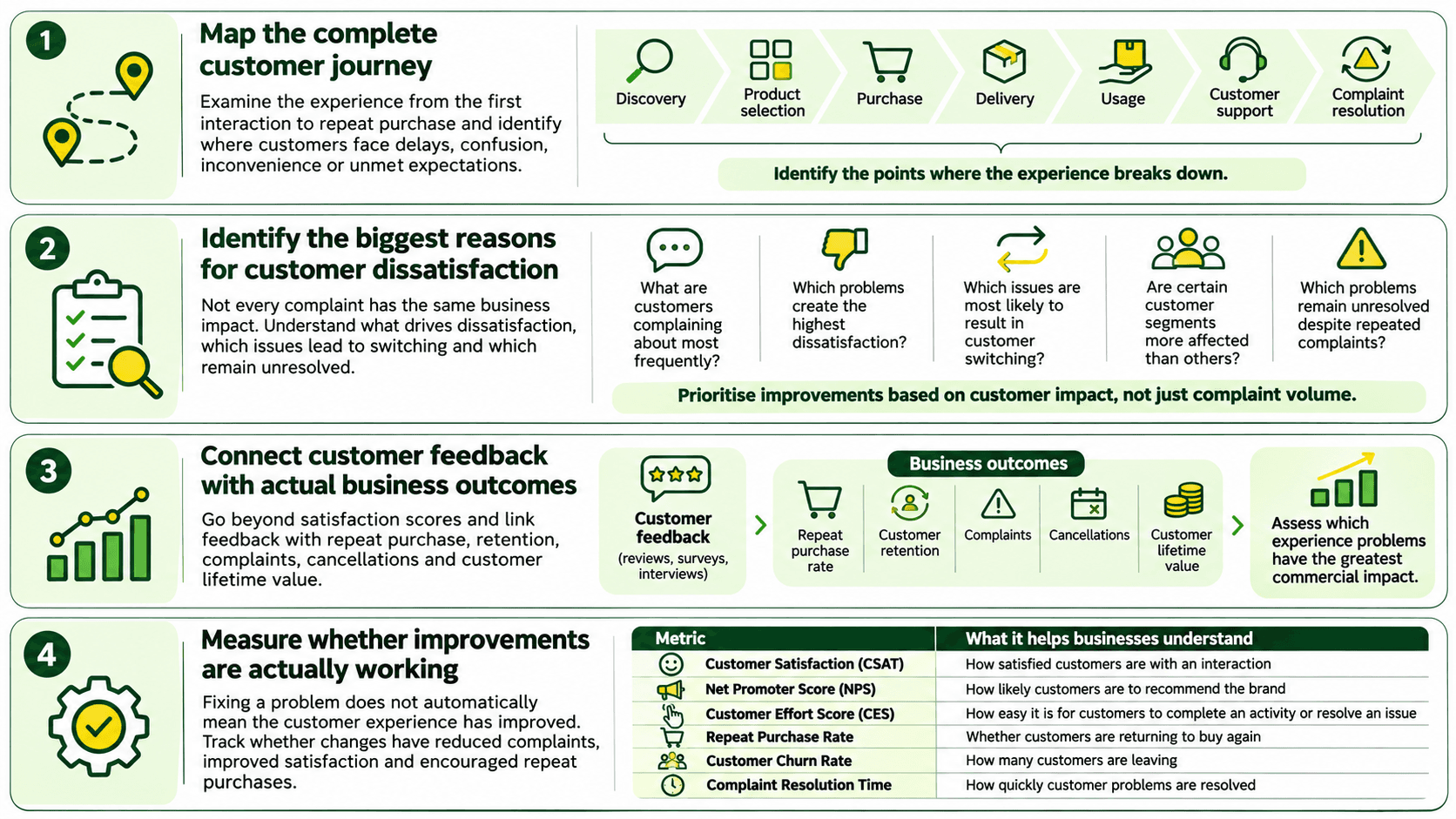
These measures should be viewed together. No single metric can explain the complete customer experience.
How Electroyuva Can Help
Consumer and customer experience research can help businesses answer four important questions:
- What are the biggest sources of customer dissatisfaction?
- Which touchpoints have the greatest influence on customer loyalty?
- What are the primary reasons customers consider switching brands?
- Which improvements are most likely to increase satisfaction and repeat purchases? Electroyuva uses quantitative surveys, qualitative interviews, customer journey assessments and voice-of-customer analysis to help businesses understand these questions. The objective is to turn customer feedback into practical business decisions.
Customer Retention Begins with Keeping Promises
Customers do not always leave because a competitor offers something significantly better. Sometimes, they leave because their current brand repeatedly fails to deliver a satisfactory experience. The research from Infobip, ServiceNow and KPMG highlights the importance of meeting expectations, reducing customer effort and resolving problems effectively. For businesses, the lesson is clear: attracting customers is only the beginning. Retaining them requires consistent performance across every interaction.
At Electroyuva, we believe customer loyalty is not built through loyalty programmes alone. It is built every time a brand delivers what it promises and makes the customer's experience easier. Because customers may forgive an occasional mistake, but they are unlikely to remain loyal to a brand that repeatedly makes their lives difficult.
Electroyuva | Consumer Intelligence. Market Understanding. Business Growth.
Sources & References Infobip (July 2026), India Digital CX Report 2026: AI, Data, and Orchestration Are Rewriting CX in India. Official report announcement. ServiceNow (March 2026), Third Customer Experience Report 2026. Report findings. KPMG India (March 2025), India Customer Experience Report 2025. Official report.
Research note: The statistics above come from separate studies with different methodologies and respondent groups. They should not be directly compared. The Infobip figures on expectations represent the reported weight of a CX pillar, not the percentage of customers who experienced unmet expectations.