

Client challenge
An air purifier company was evaluating the Indian market and wanted to understand its commercial potential before committing resources towards market entry and expansion.
While rising pollution levels indicated a growing need for indoor air quality solutions, the company needed to establish whether this need translated into a commercially viable market.
The key challenge was to estimate the market opportunity, understand existing household penetration and identify the customer segments and geographies offering the greatest potential.
Research objective
The objective was to estimate the size of India's air purifier market and evaluate the addressable opportunity for the company.
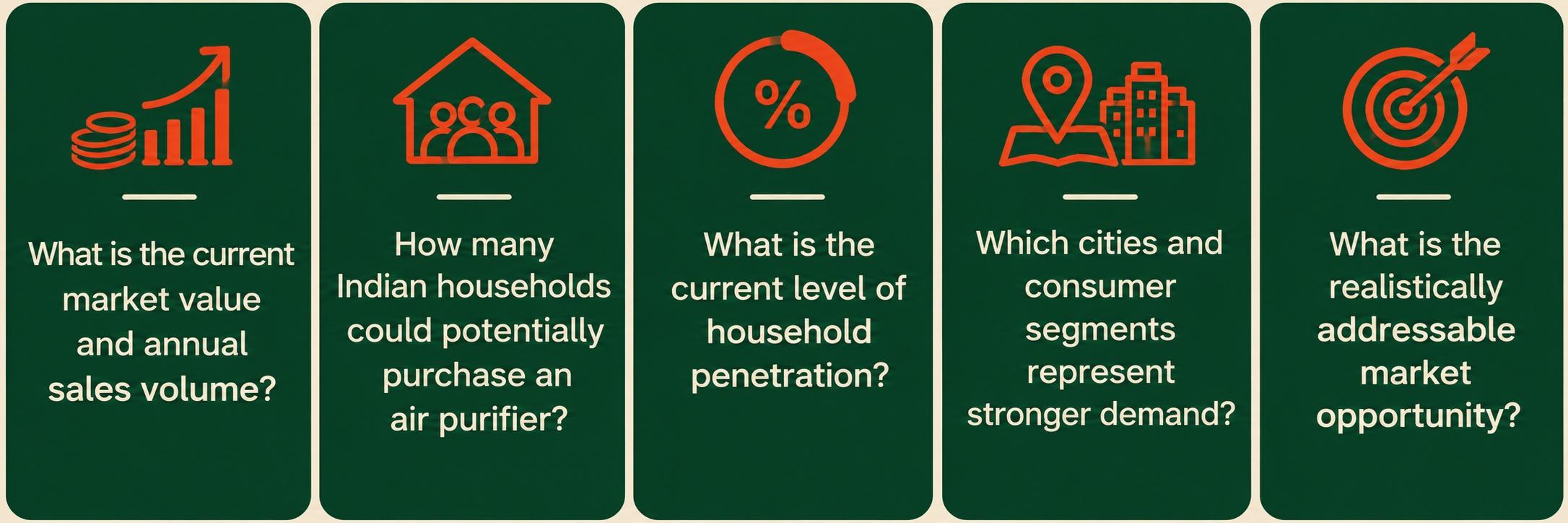
The assessment focused on five key questions:
Methodology
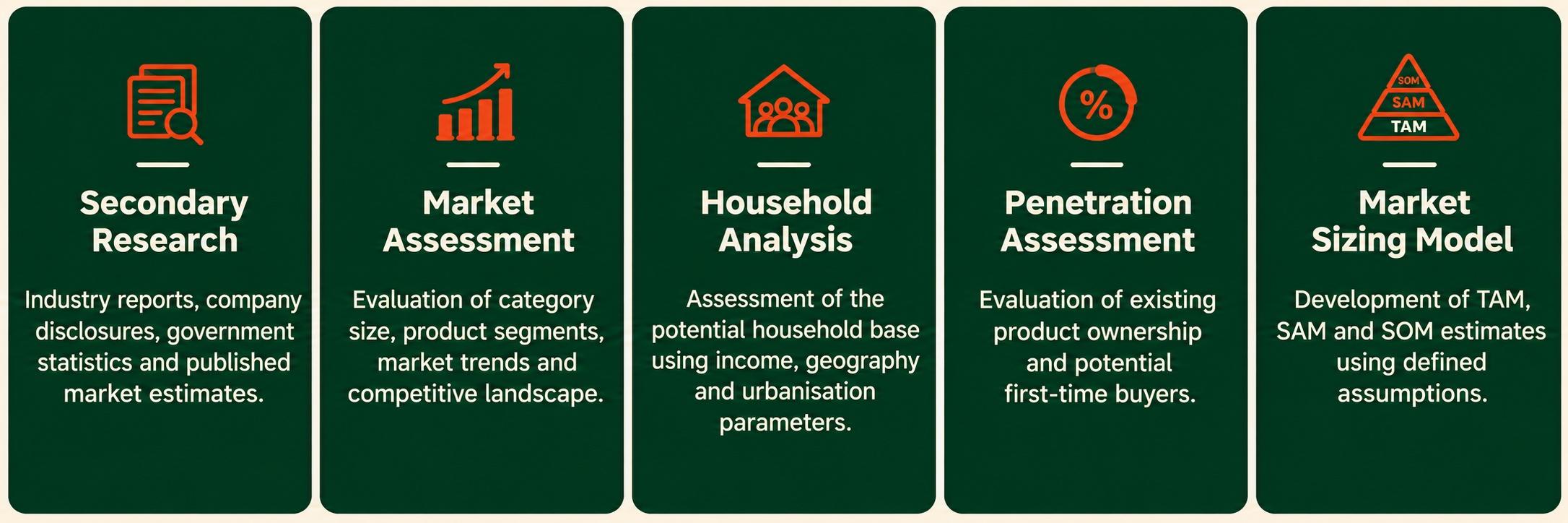
We adopted a structured market sizing approach combining secondary research, household-level analysis and demand assessment.
The study covered:
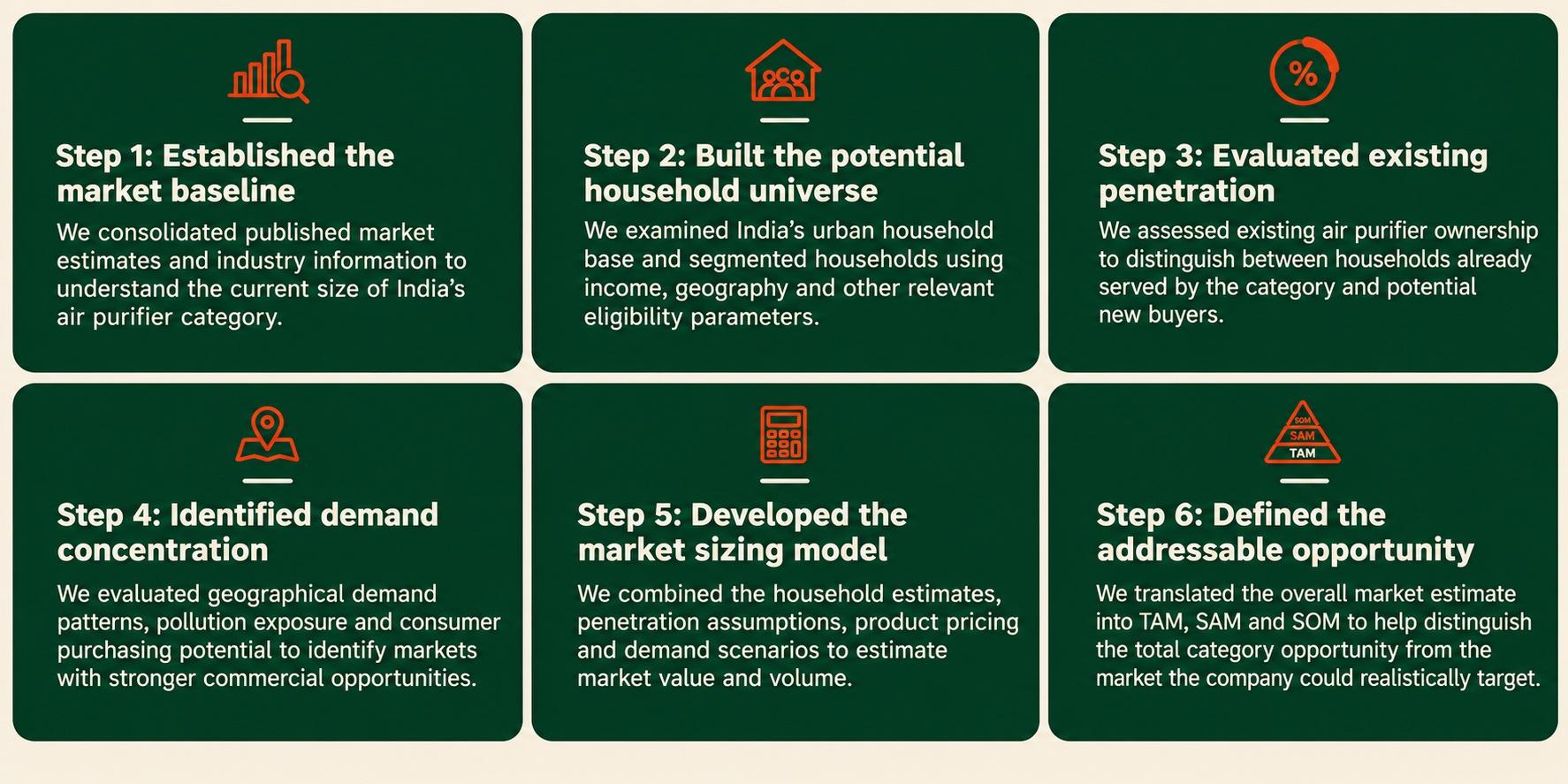
How electroyuva did it
Key Insights
Secondary research provided important reference points for understanding the category:
- Technopak estimated India's air purifier market at approximately ₹248 crore in FY2024, with a projection of ₹564 crore by FY2029.
- Euromonitor reported a different estimate of approximately ₹546 crore in 2024, highlighting the importance of consistent market definitions.
- Technopak's analysis indicated household penetration of less than 1%.
- Approximately 75% of demand was concentrated in Delhi NCR, Mumbai, Bengaluru and Kolkata, according to the Technopak analysis.
These findings highlight a category with low reported household penetration and a concentration of demand in major urban markets.
The final market sizing model would use clearly defined assumptions and reconcile differences between published market estimates.
Business Outcome
The assessment provides a structured understanding of India's air purifier market and its potential addressable household base.
It helps the company:
- Evaluate the commercial attractiveness of the Indian market.
- Identify priority consumer and geographical segments.
- Understand the gap between theoretical and addressable demand.
- Develop market-entry and investment scenarios.
- Establish a basis for future sales and growth planning.
Outcome: An evidence-led market sizing assessment to support market entry evaluation, investment planning and geographical prioritization.