
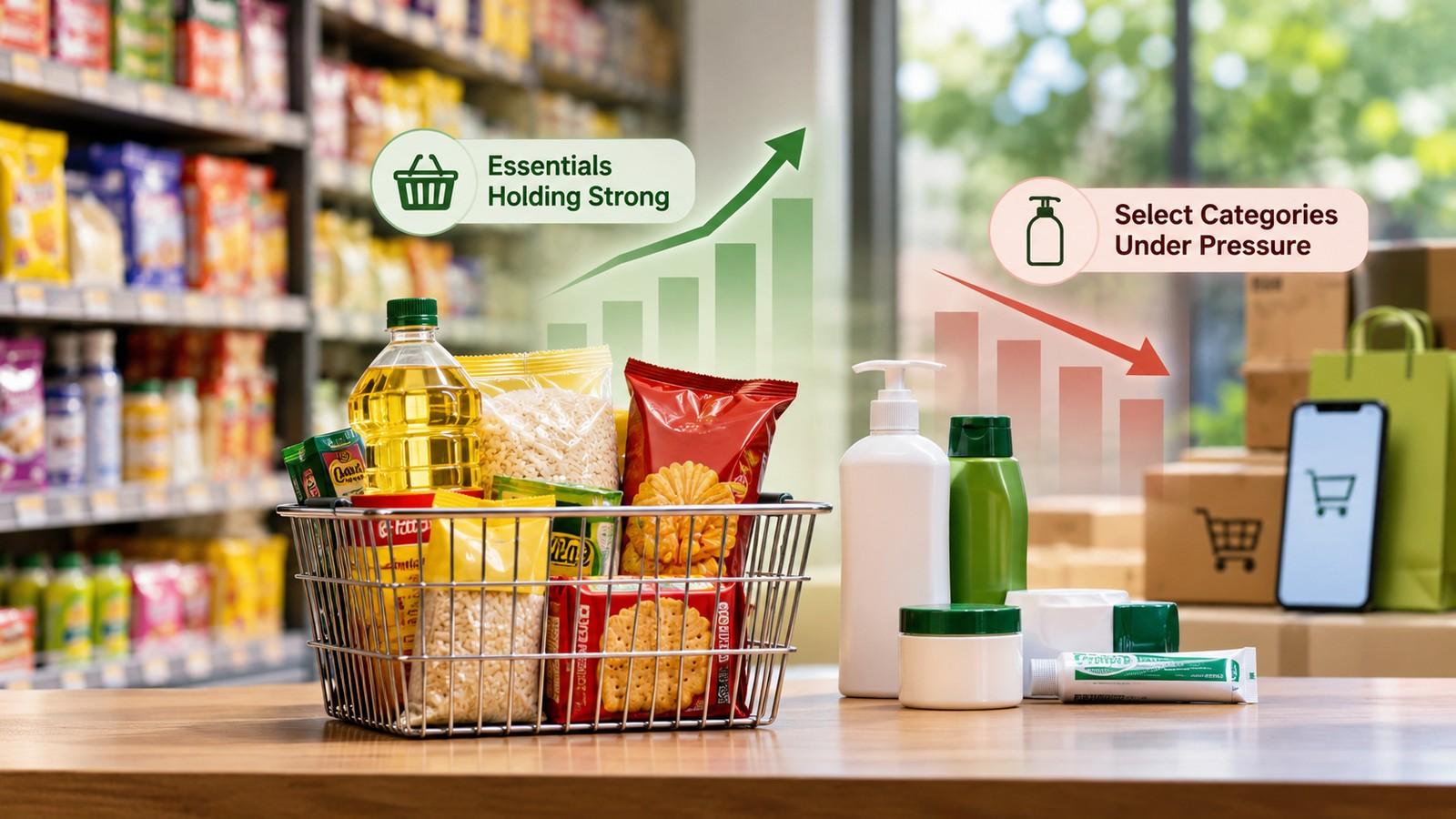
Why Brands Need to Rethink Category Priorities and Growth Strategies?
For years, FMCG companies have relied on a familiar growth strategy: expand distribution, launch new products, increase advertising and capture a larger share of consumer spending.
But what happens when consumers become more selective about what they buy?
A household may continue purchasing essential groceries while reducing spending on personal care. A consumer may switch to a smaller pack, delay buying a discretionary product or choose a lower-priced alternative. Another may continue buying premium products but reduce the frequency of purchases.
These changes do not affect every FMCG category equally.
Recent consumer indicators suggest that buying interest in several everyday-use categories is weakening. At the same time, other categories and distribution channels continue to show opportunities.
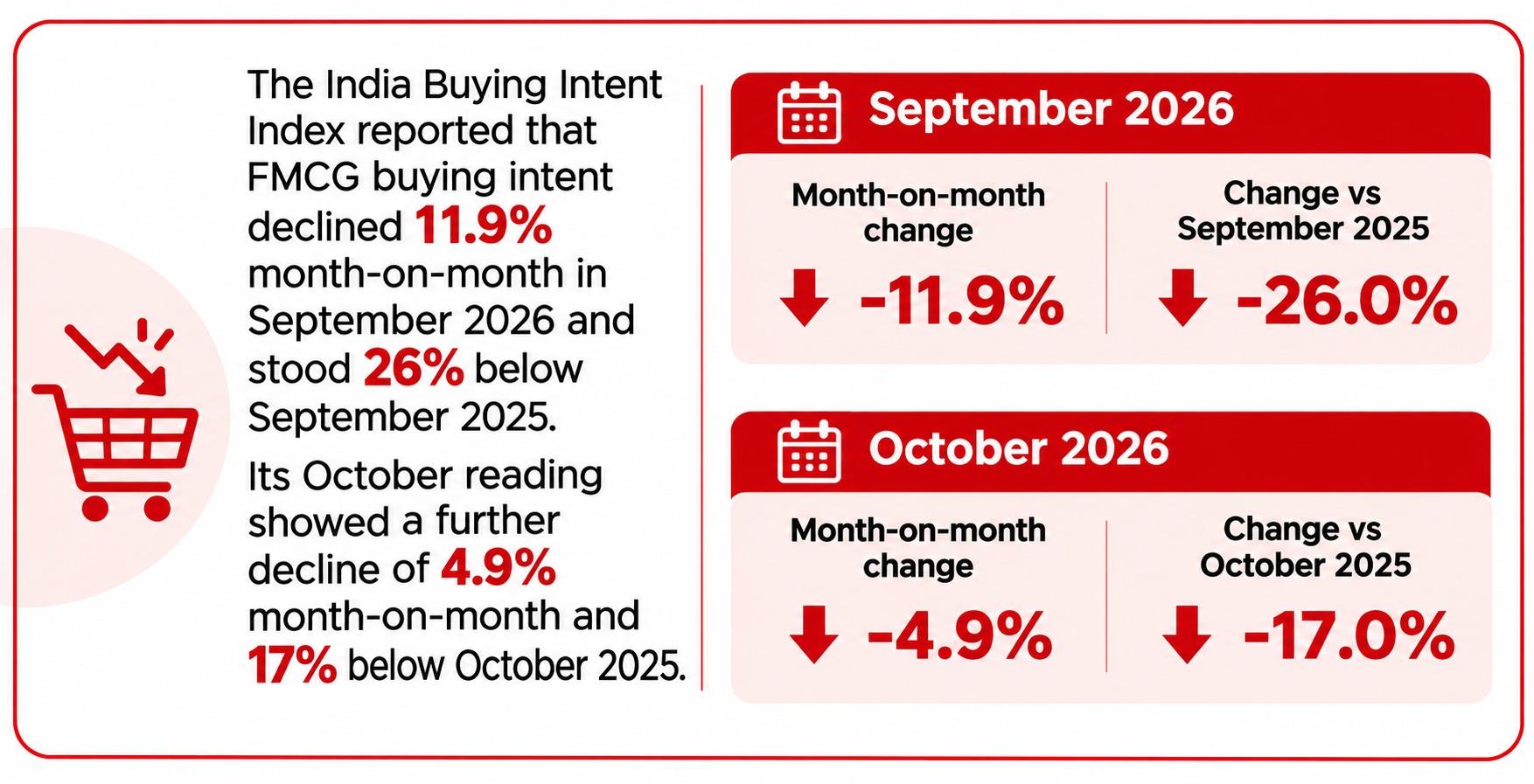
However, buying intent is not the same as actual sales. The signal needs to be understood alongside household consumption, sales volumes, pricing and distribution data.
At Electroyuva, we believe FMCG companies need to reconsider how they allocate resources across categories, brands and consumer segments.
The next growth opportunity may not come from expanding every category. It may come from identifying which categories deserve more investment, which need repositioning and which require a different growth strategy.
What supports our thinking?
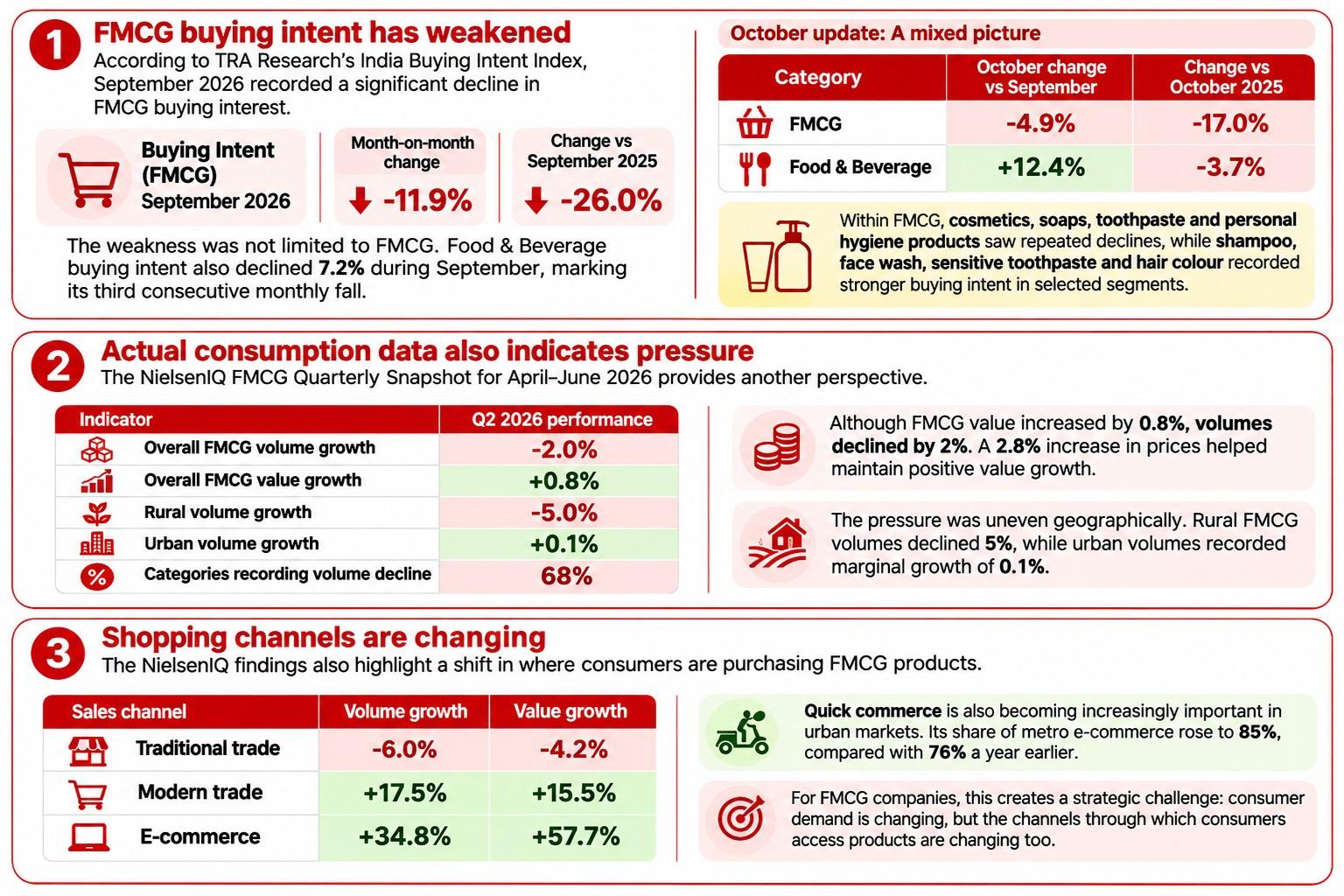
The figures indicate that organized retail and digital channels are gaining momentum while traditional trade is under pressure.
A brand may have a strong product proposition but still lose visibility if it does not adapt its distribution and channel strategy.
What does the evidence mean?
The findings suggest that FMCG companies should look beyond overall category growth. The market is showing differences across consumer needs, product categories, geographies and distribution channels.
We believe there are four important business implications.
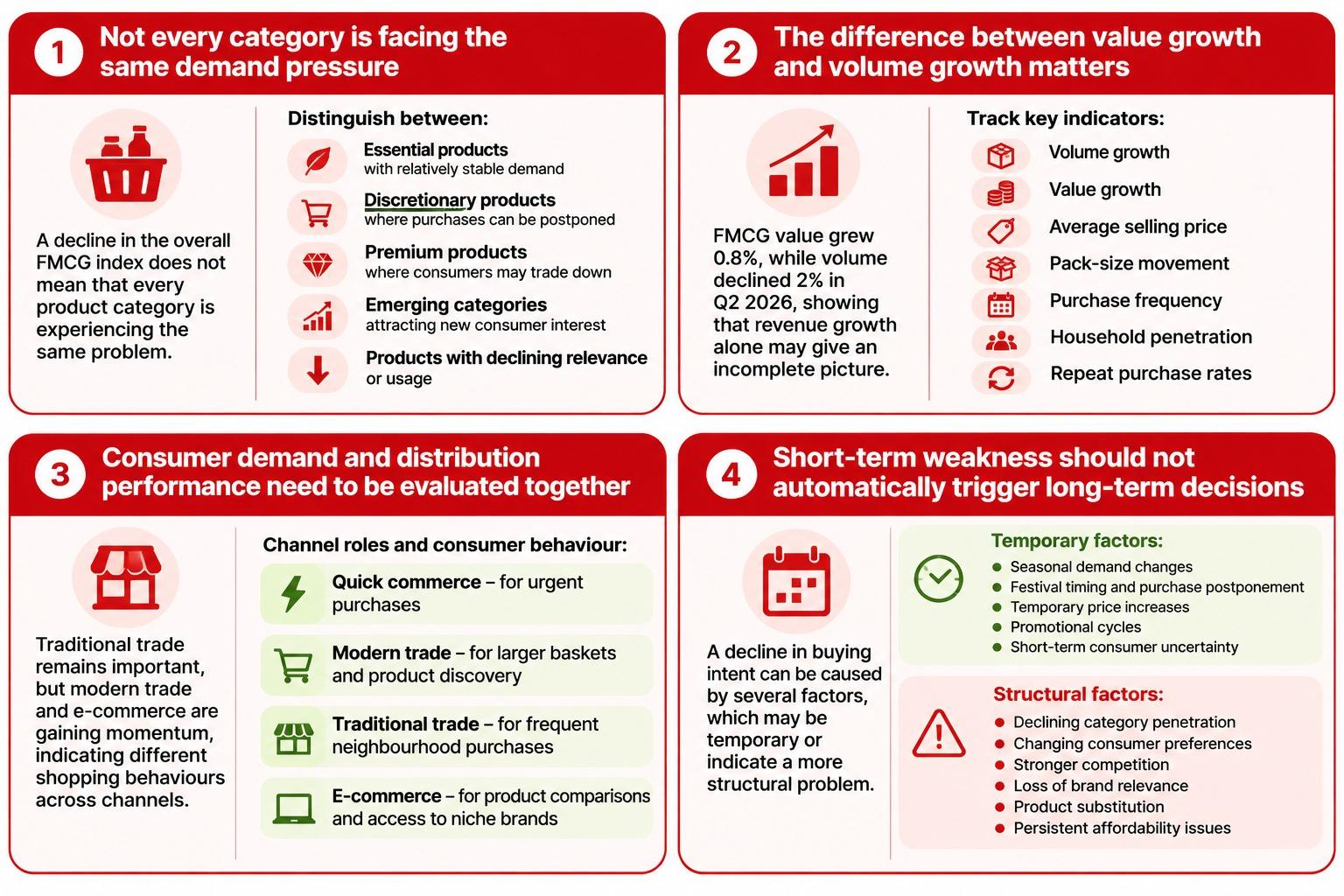
The challenge is to understand which type of pressure a category is experiencing before changing pricing, product or investment strategy.
Electroyuva's Perspective – Should brands rethink their category priorities?
We believe FMCG companies should move towards a more selective category investment strategy. Instead of allocating budgets based primarily on historical sales or overall category size, brands should evaluate future demand potential, competitive position and consumer relevance.
Electroyuva recommends five areas of focus.
Separate temporary softness from structural decline
Brands should compare multiple periods of data rather than reacting to a single monthly decline. A useful framework is:
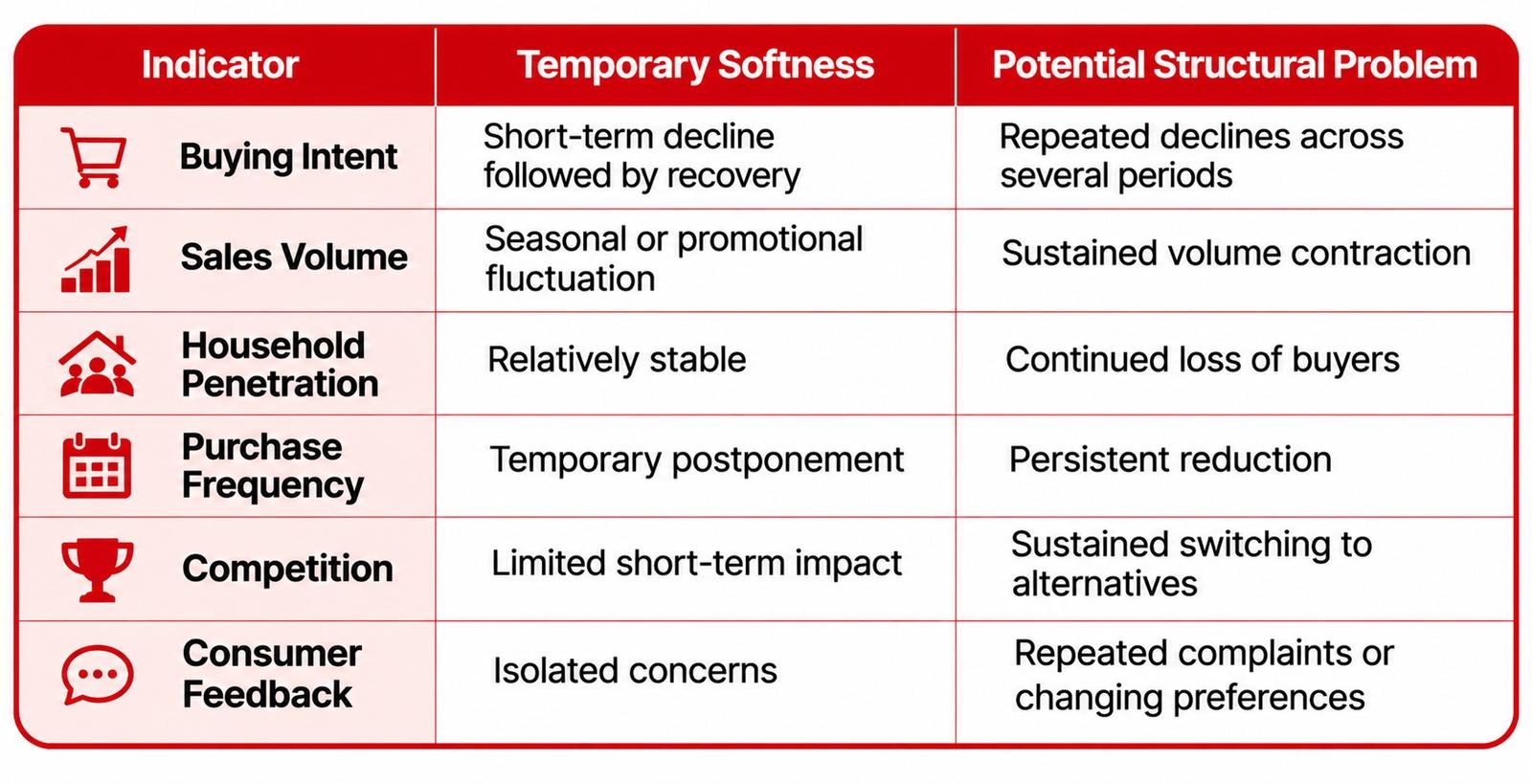
The objective is to identify whether the category needs a short-term sales intervention or a deeper strategic response.
Reassess category and product portfolios
Companies should evaluate their product portfolios based on demand trends, profitability and future potential.
Some categories may deserve additional investment because they are gaining consumer interest. Others may require improved product propositions or more accessible price points.
A portfolio review should examine:
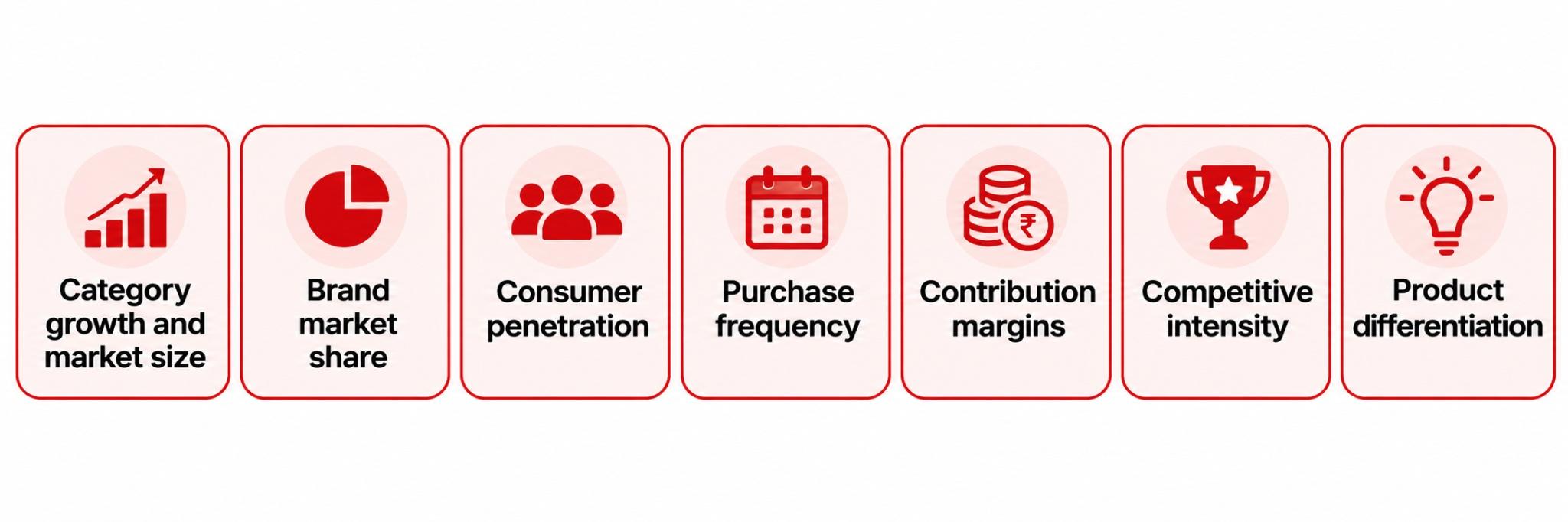
This can help businesses identify where to invest, defend, reposition or rationalize.
Revisit pricing and pack architecture
Affordability can become a significant issue when consumer purchasing power is under pressure. Brands should understand whether consumers are trading down, choosing smaller packs or switching to competing products.
Potential responses include:
- Smaller and more accessible packs.
- Value-oriented product variants.
- Better price-pack architecture.
- Premium options for less price-sensitive segments.
- Targeted promotions rather than blanket discounts.
The objective is to protect consumer access without unnecessarily damaging margins.
Reallocate investment across channels and markets
Brands should identify where their target consumers are shopping and how channel economics are changing.
For example, a product category may be experiencing pressure in traditional trade but gaining visibility through modern retail or e-commerce.
However, channel growth should not automatically translate into higher investment. Brands must also examine margins, customer acquisition costs, promotional spending and repeat purchases.
Distribution strategy should reflect both consumer demand and commercial viability.
Build a category-level demand intelligence system
Brands need a regular mechanism to track changes in consumer demand.
Electroyuva recommends bringing together four types of information:
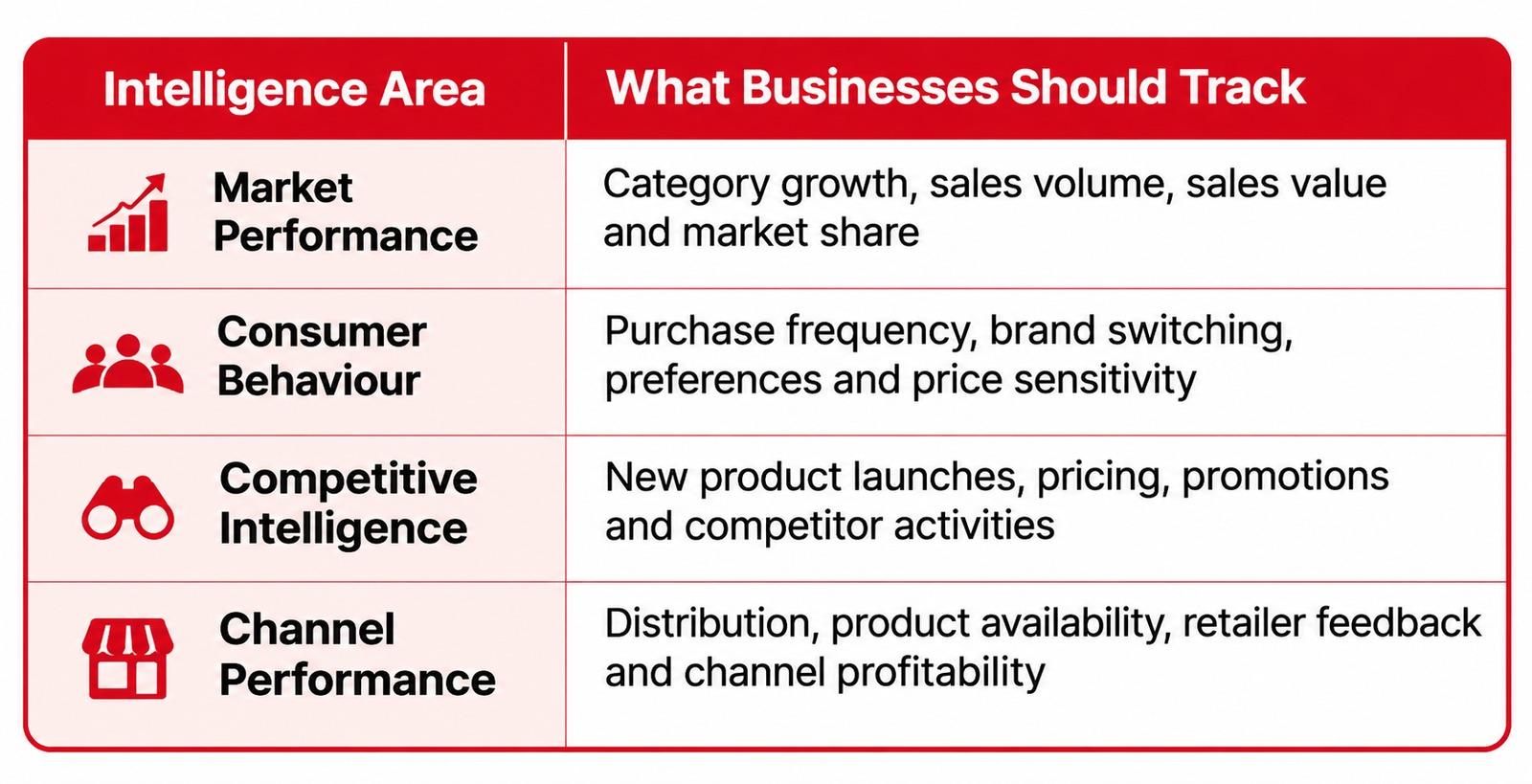
Consumer surveys, retailer interviews, sales analysis and secondary research can help explain why a category is gaining or losing momentum. This allows management teams to respond before temporary changes become long-term business problems.
What is our final point of view?
India's FMCG market remains an important growth opportunity, but the latest indicators suggest that demand is becoming more selective.
Some categories are experiencing sustained weakness, while others continue to attract consumer interest. At the same time, differences in rural and urban consumption and the shift towards organised retail and digital channels are changing how brands compete.
For FMCG companies, the answer is not necessarily to reduce investment across the board.
It is to understand where demand is weakening, why consumers are changing their behaviour and which categories still offer a strong growth opportunity.
At Electroyuva, we believe successful FMCG strategies will increasingly depend on sharper category choices, better consumer understanding and more disciplined resource allocation.
The next phase of FMCG growth will not be won by investing more in every category. It will be won by investing smarter in the categories consumers still want—and understanding why they want them.
Electroyuva | Consumer Intelligence. Market Understanding. Business Growth.
Sources and References
- TRA Research / India Buying Intent Index – September Buying Intent Shows Shifts Becoming Trends: FMCG & F&B Weaken; Digital & BFSI Rise YoY, 1 October 2026.
- TRA Research / India Buying Intent Index – October 2026 Monthly Summary, published 1 November 2026.
- NielsenIQ – FMCG Quarterly Snapshot, April–June 2026, findings reported by The Economic Times, 27 September 2026.
- NielsenIQ / Bintix – India FMCG Consumption Pulse: April–June 2026. Category, household spending and volume trends.