

What Do Indian Parents Really Look for in Infant Nutrition Products?
What does electroyuva think?
The infant nutrition market is not simply about feeding babies. It is about helping parents make one of the most important decisions in a child's early years.
For parents, choosing an infant nutrition product involves more than comparing prices or selecting a familiar brand. They consider nutritional value, ingredients, safety, suitability for the child's age, convenience and trust in the company behind the product. At the same time, the category is becoming more diverse. Alongside established infant milk formula and baby cereal brands, parents can find packaged complementary foods, traditional-ingredient-based products and specialized nutrition options.
This creates an important opportunity for businesses. However, growth will not come only from introducing more products. Brands need to understand what parents are looking for, what influences their choices and where existing products are not meeting their expectations.
At Electroyuva, we believe the next phase of growth in infant nutrition will depend on understanding the parent behind the purchase, not just the product being sold.
What support our thinking?
According to Euromonitor International's Baby Food in India report, published in October 2026, India's baby food market is estimated to record retail value sales of approximately ₹10,814 crore in 2026, with forecast growth of 7%.
This estimate covers the broader baby food category. It should not be interpreted as the market size of infant formula alone.
The broader category includes several product groups:
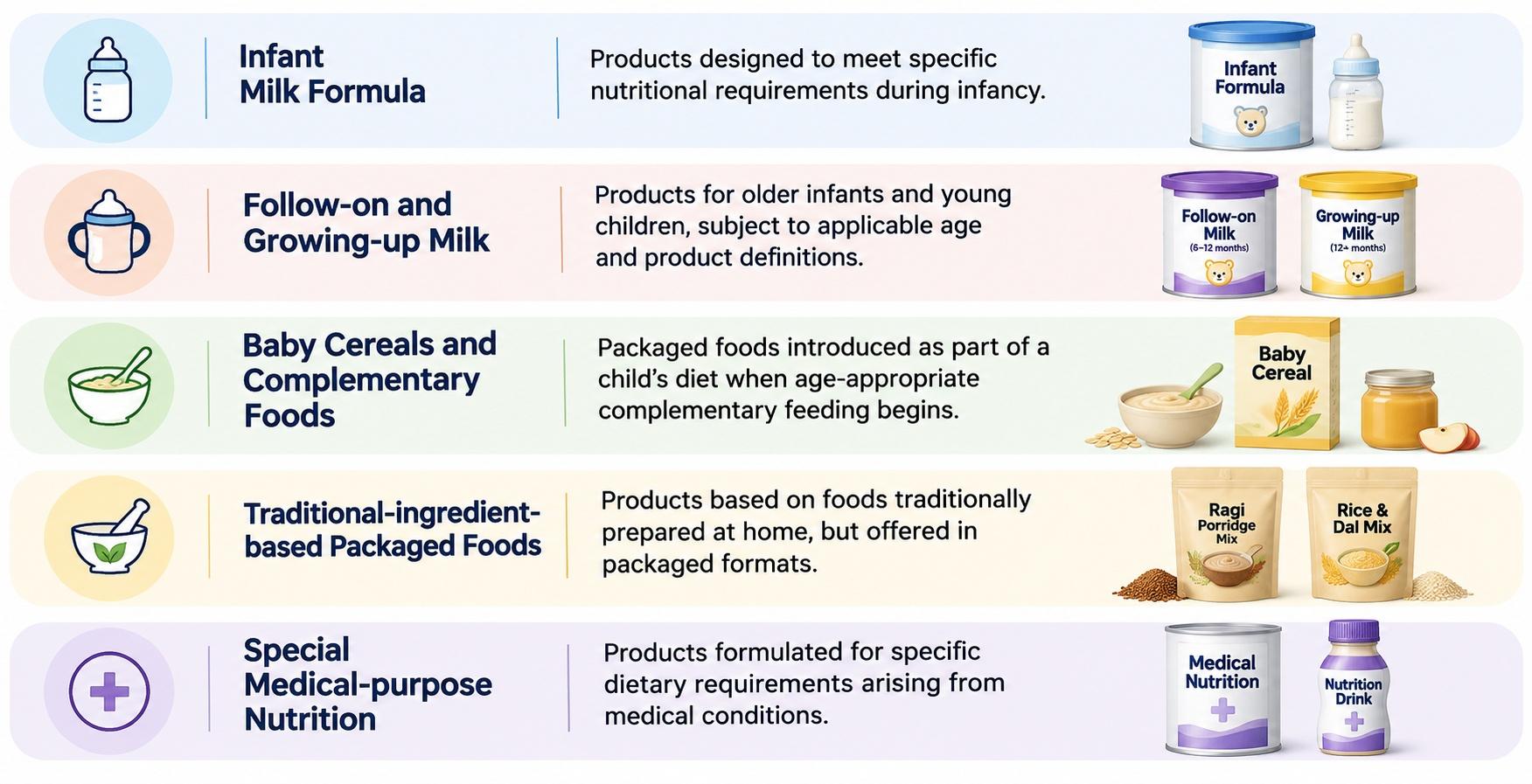
The categories serve different needs and age groups. They also operate under different product, regulatory and purchasing considerations.
Established brands and new product propositions
The market includes established multinational and Indian companies with products across different segments. Examples include:
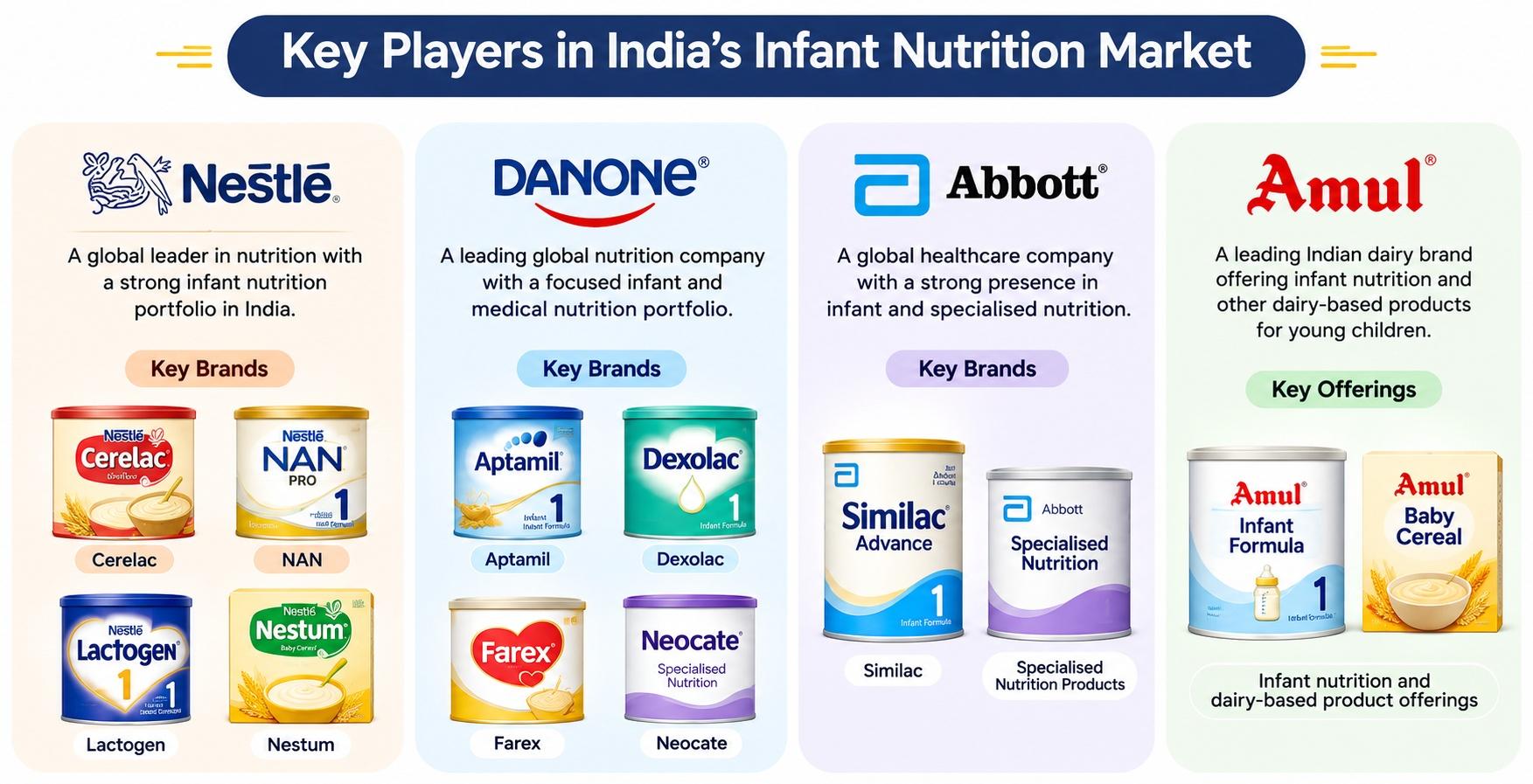
Alongside these established players, newer brands such as Timios, Slurrp Farm and Early Foods are building propositions around packaged complementary foods and convenient options for parents.
These brands do not all compete in the same product segment. Their presence illustrates how the broader baby food market includes different needs, propositions and consumer groups.
Distribution is also changing
Traditional retail and pharmacies remain important channels for baby food purchases. At the same time, e-commerce is expanding access to product variety and making it easier for parents to compare available options.
Euromonitor identifies the continued importance of pharmacies alongside the growth of e-commerce as relevant developments in India's baby food distribution landscape.
Regulation plays a central role
Infant nutrition is a highly regulated category. Product composition, labelling, claims and marketing are governed by specific requirements.
India's regulatory framework includes:
-
The Infant Milk Substitutes, Feeding Bottles and Infant Foods (Regulation of Production, Supply and Distribution) Act, 1992.
-
The Food Safety and Standards (Foods for Infant Nutrition) Regulations, 2020.
-
Applicable FSSAI amendments and related food safety and labelling requirements.
This means that businesses entering the category must understand regulatory requirements from the beginning. Product innovation and marketing communication need to operate within the applicable rules.
What Does the Evidence Mean?
The opportunity in infant nutrition is not limited to market growth. It lies in understanding the different needs that exist within the category.
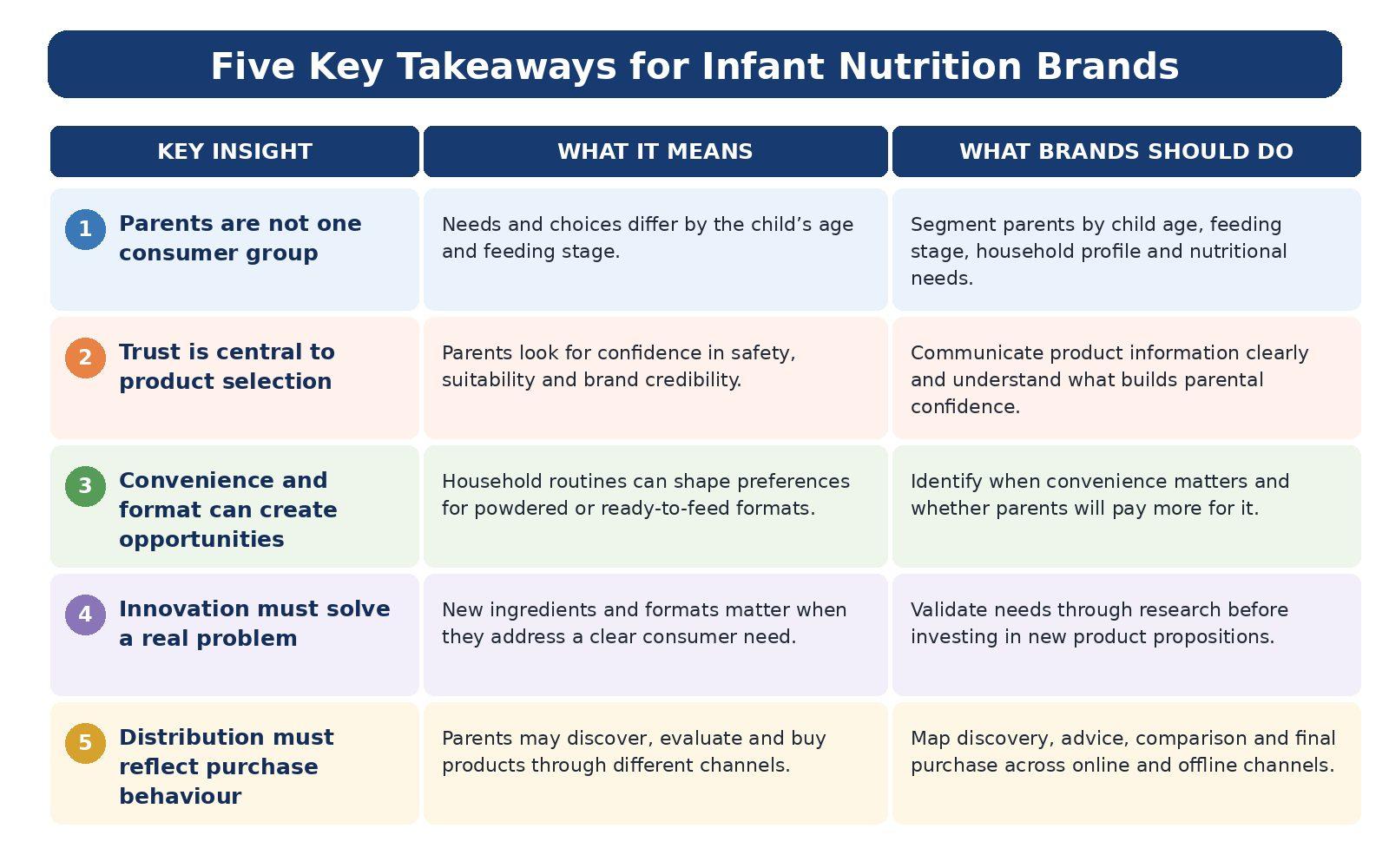
A distribution strategy based only on the availability of online or offline channels may miss these differences.
Electroyuva's Perspective – What Should Businesses Do?
We believe businesses need a consumer-led approach to identify and evaluate opportunities in India's infant nutrition market.
Electroyuva recommends focusing on five areas:
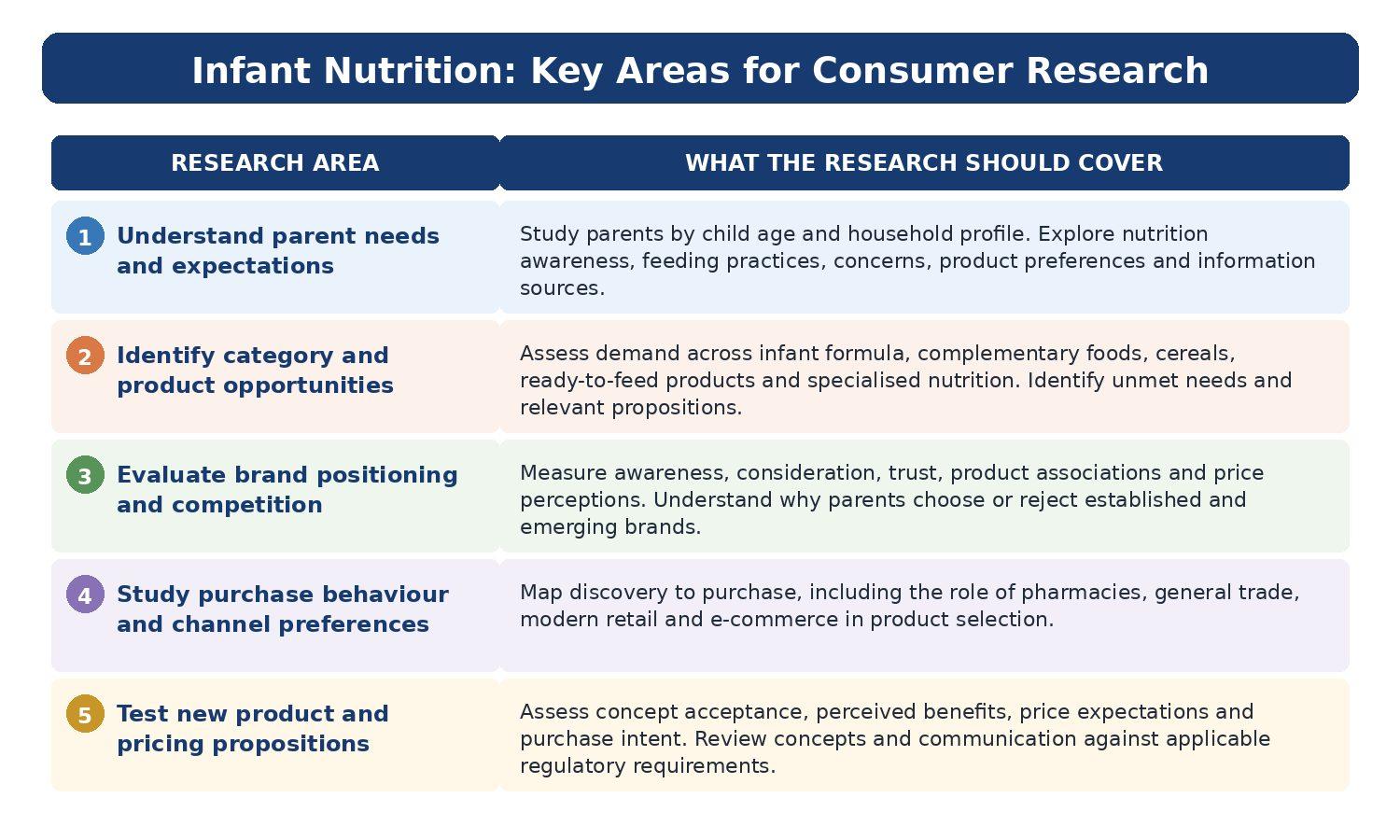
The objective should be to identify opportunities that are commercially relevant, consumer-led and appropriate for the regulatory environment.
What Is Our Final Point of View?
India's infant nutrition market offers opportunities across established products, complementary foods, specialized nutrition and emerging product formats. However, market growth alone does not guarantee success. Brands need to understand the different needs of parents, build confidence in their products and develop propositions that address genuine consumer requirements. The businesses that understand how parents discover, evaluate and purchase infant nutrition products will be better placed to identify meaningful opportunities.
At Electroyuva, we believe the next opportunity in infant nutrition will not come from launching more products alone. It will come from understanding parents better and translating those insights into relevant products, stronger positioning and better market strategies.
Electroyuva | Consumer Intelligence. Market Understanding. Business Growth.
Sources and References
- Euromonitor International – Baby Food in India. Market overview, category developments and distribution trends.
- World Health Organization (WHO) – Infant and Young Child Feeding.
- World Health Organization (WHO) – Guideline for Complementary Feeding of Infants and Young Children 6–23 Months.
- Ministry of Health and Family Welfare, Government of India – National Guidelines on Infant and Young Child Feeding.
- Government of India – India Code – Infant Milk Substitutes, Feeding Bottles and Infant Foods (Regulation of Production, Supply and Distribution) Act, 1992.
- Food Safety and Standards Authority of India (FSSAI) – Food Safety and Standards (Foods for Infant Nutrition) Regulations, 2020, including applicable amendments.