

India's luggage market is shaped by more than travel demand. Consumer preferences, brand perception, product quality, retail distribution and dealer economics all influence how brands compete and grow.
For businesses and investors evaluating the category, understanding these factors is important to assess the strength of a brand, the attractiveness of the market and the sustainability of its business model.
Through a combination of consumer research and dealer interactions, Electroyuva examined the Indian luggage market from both demand-side and channel perspectives.
Client Challenge – Understanding the Market Beyond Sales and Market Size
The luggage category presents a combination of consumer, brand and distribution-related challenges.
While established brands compete on trust, quality and product range, changing consumer expectations and the growth of online channels are influencing how people discover, evaluate and purchase luggage.
At the same time, the economics of physical retail remain important. Dealer margins, inventory requirements, credit terms and operating costs can influence the profitability of the distribution network.
A meaningful assessment of the category therefore requires looking beyond market size and sales performance.
The research focused on five key business questions:
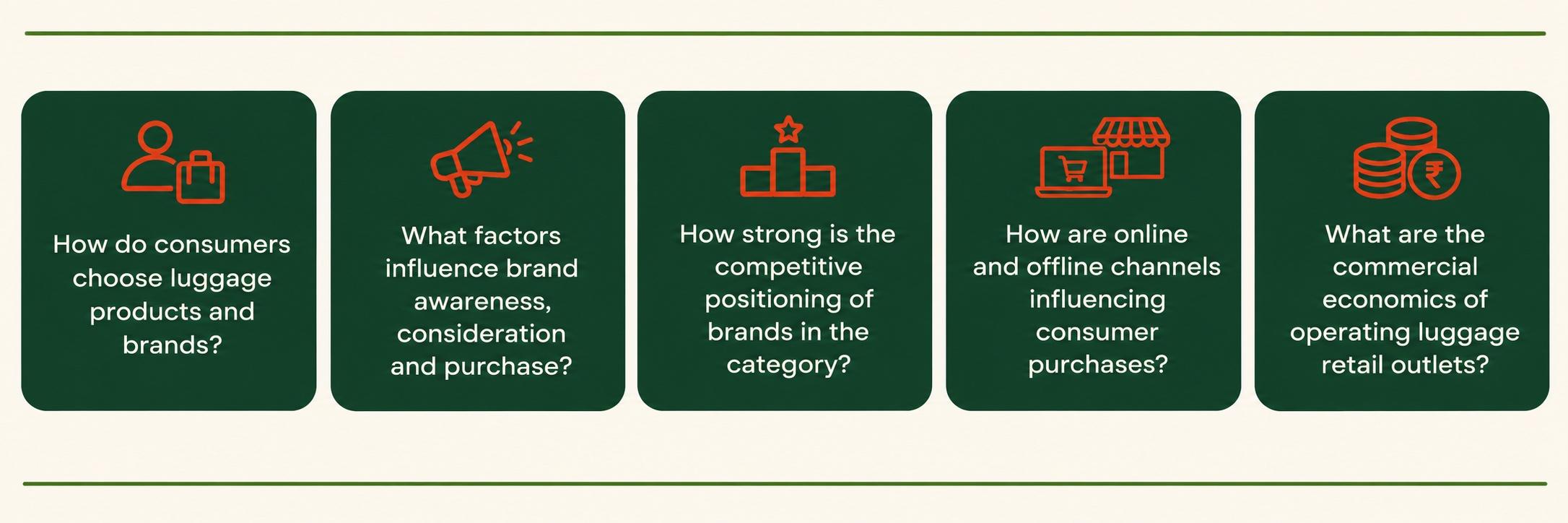
The objective was to develop a comprehensive understanding of the market by connecting consumer behavior, brand competitiveness and retail economics.
Research Objective – What Did We Set Out to Understand?
Electroyuva structured the research around four interconnected areas.
Bringing these four areas together helped establish a more complete view of the category and the factors influencing business performance.
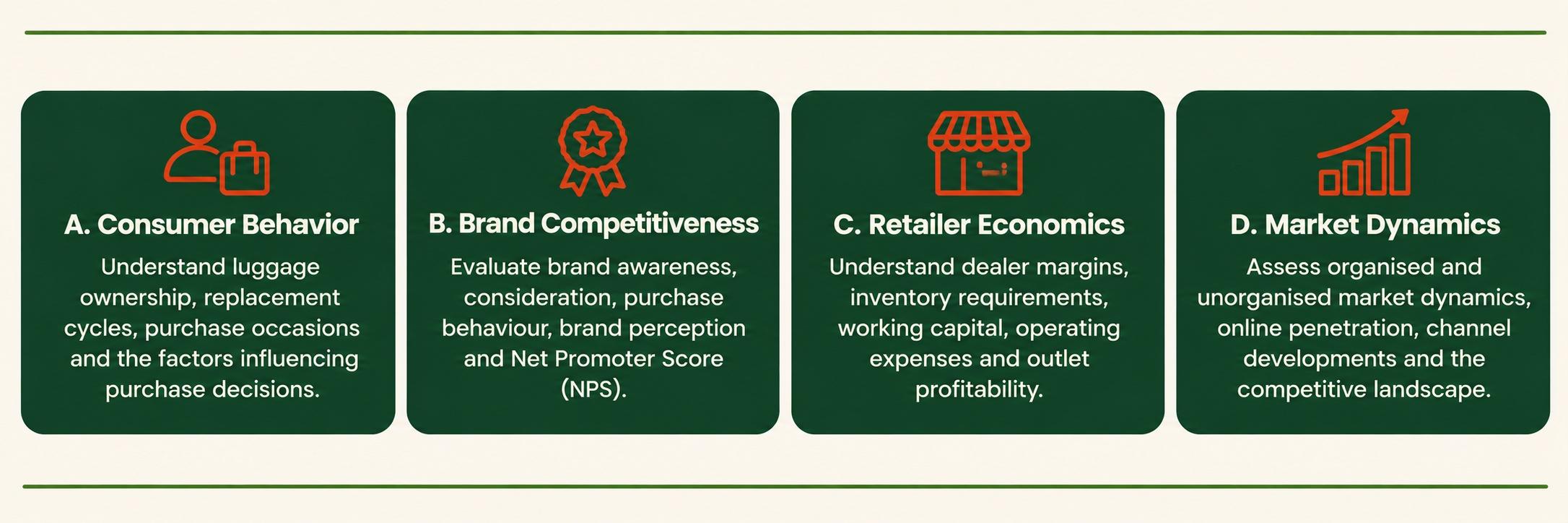
Bringing these four areas together helped establish a more complete view of the category and the factors influencing business performance.
Methodology – Combining Consumer and Trade Research
The study followed a mixed-method research approach, combining quantitative consumer research with qualitative interactions among consumers and dealers.
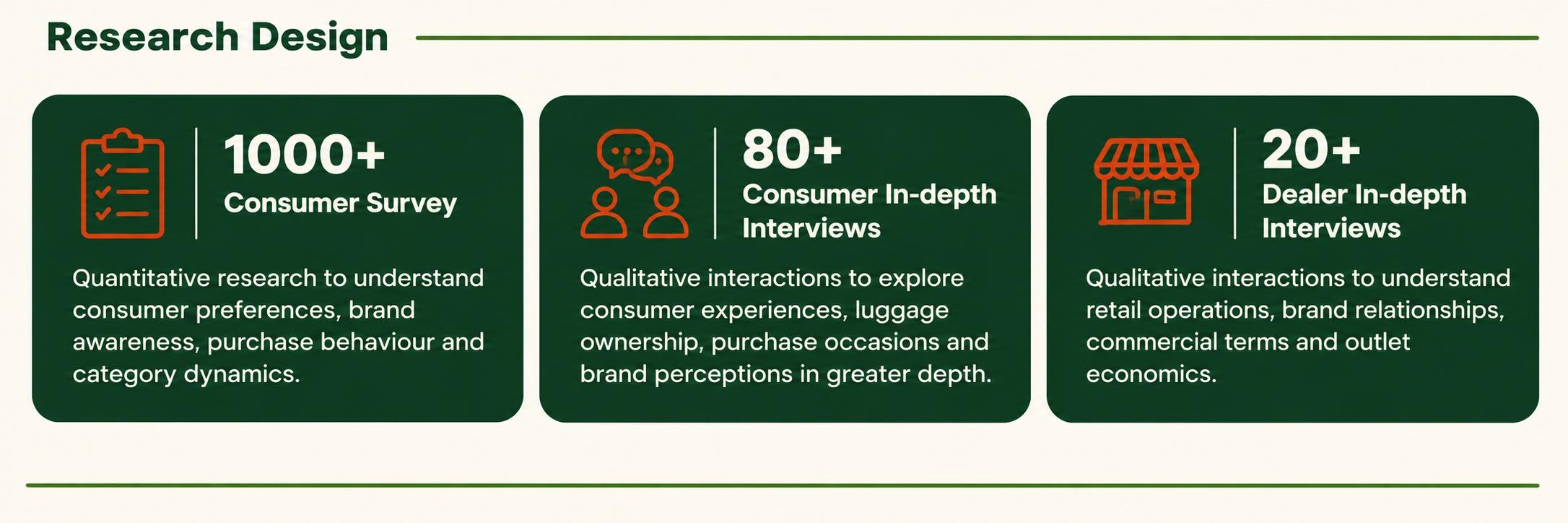
Research Coverage
- Consumer segments: Gen Z, Millennials and Gen X.
- Geographic coverage: Metro, Tier I, Tier II and Tier III cities.
- Retail formats: Exclusive Brand Outlets (EBOs) and Multi-Brand Outlets (MBOs).
The combination of quantitative and qualitative research helped connect broad consumer patterns with the experiences of individual consumers and retail operators.
How We Did It – Connecting Consumer Insights with Commercial Economics
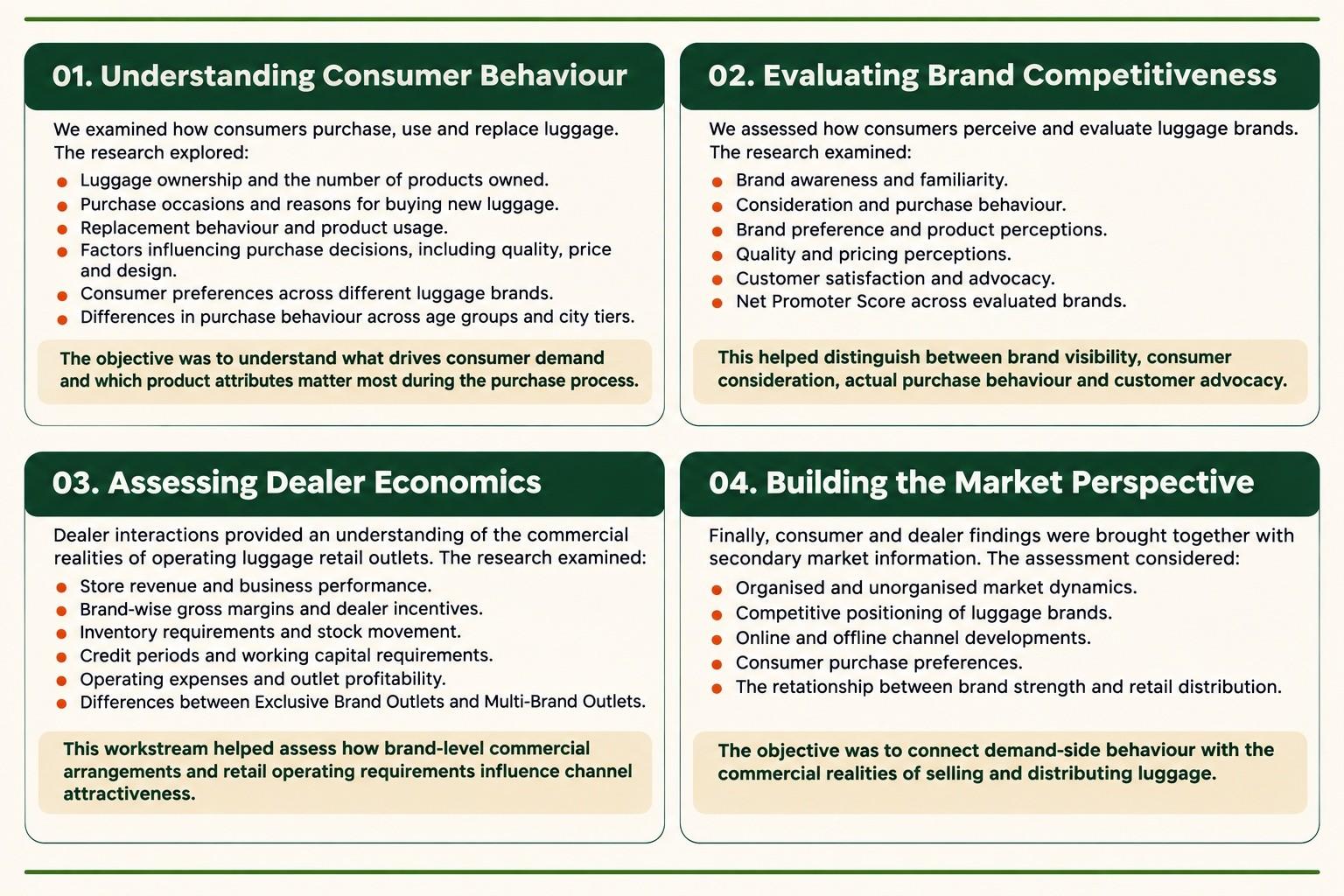
The research was organized into four workstreams. Each workstream addressed a different part of the luggage business, allowing the findings to be viewed together rather than in isolation.
Key Insights – What Did the Research Reveal?
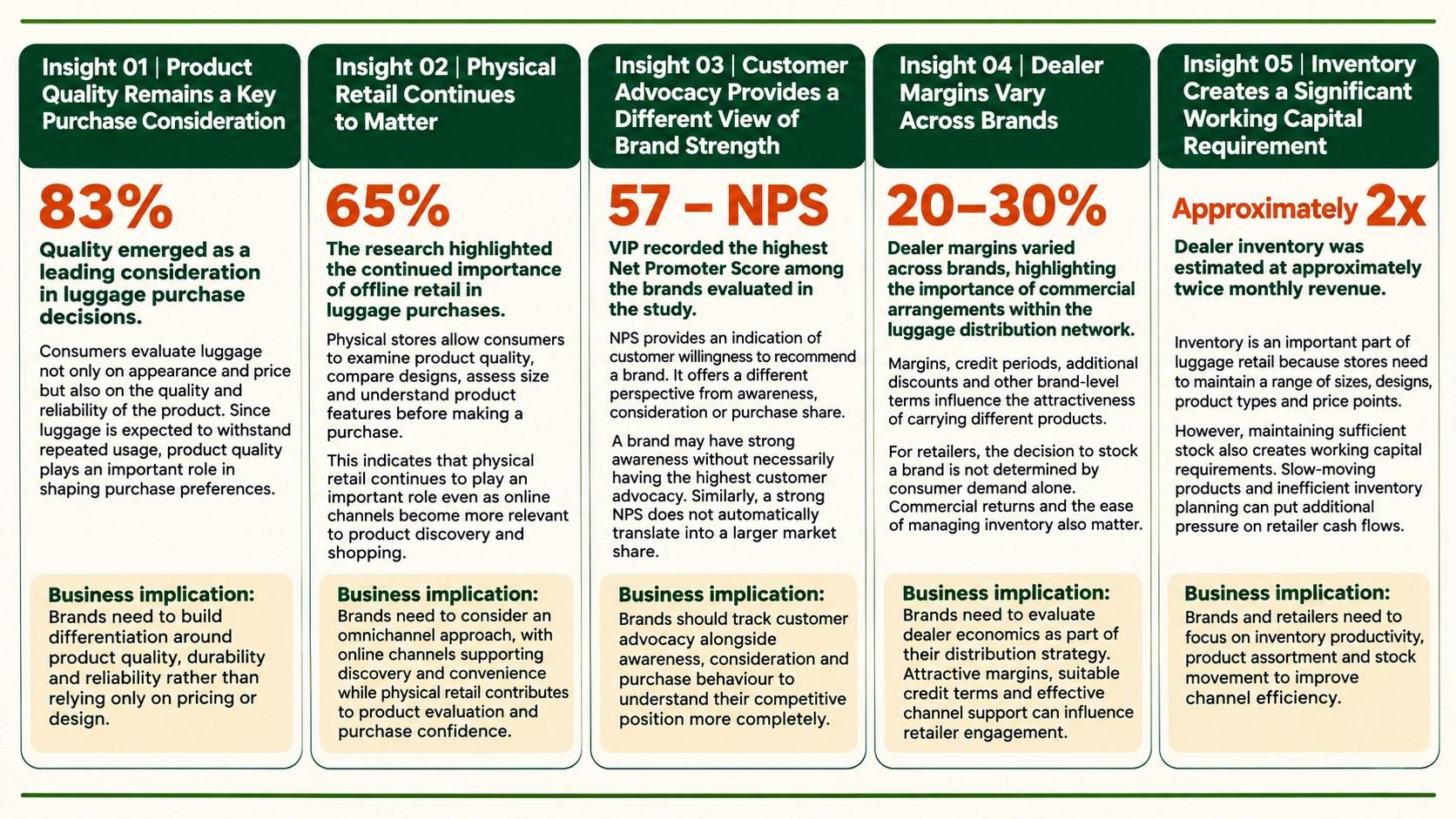
The research highlighted five important dimensions of the Indian luggage market.
Business Outcome – What Do These Findings Mean for Businesses and Investors?
The research demonstrates why evaluating a consumer business requires more than looking at revenue growth or market size.
Consumer preferences, brand competitiveness and retail economics are interconnected. A brand may have strong consumer awareness, but its ability to convert that awareness into purchases also depends on product quality, pricing, distribution and the retail experience.
Similarly, a strong retail network needs to be commercially viable for dealers. Margins, inventory requirements, credit terms and stock movement influence the sustainability of the channel.
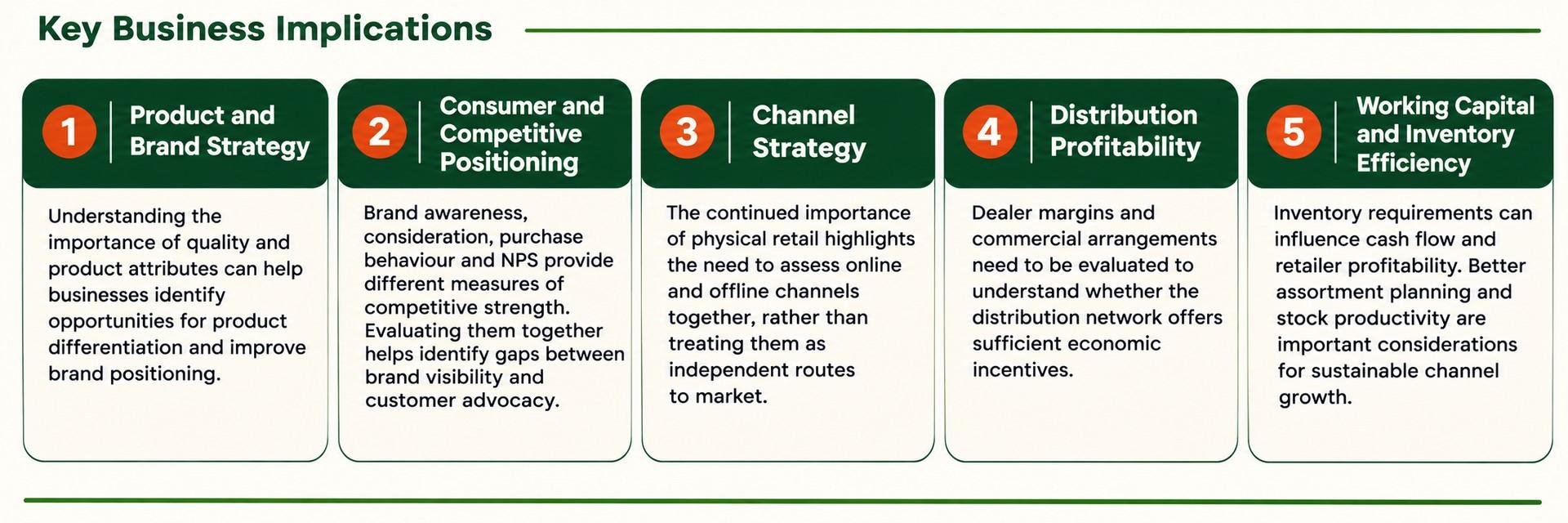
The findings provide a framework for evaluating five important business dimensions:
For investors, these dimensions can support commercial due diligence, investment evaluation and the identification of business risks and growth opportunities.
For businesses, they can inform brand strategy, product positioning, channel expansion and retail distribution decisions.
Looking Beyond the Market to Understand the Business
A market can appear attractive because of its size or growth potential. However, the long-term strength of a consumer business depends on how effectively it converts market demand into sustainable commercial performance.
The luggage research brought together consumer behavior, brand competitiveness and dealer economics to build a more complete understanding of the category. It highlights the importance of examining both sides of a consumer business: what drives consumers to purchase and what makes the distribution model commercially sustainable.
At Electroyuva, we turn market complexity into business clarity.
Consumer Intelligence | Market Intelligence | Strategic Thinking